
Euphorbia mauritanica
Euphorbia mauritanica
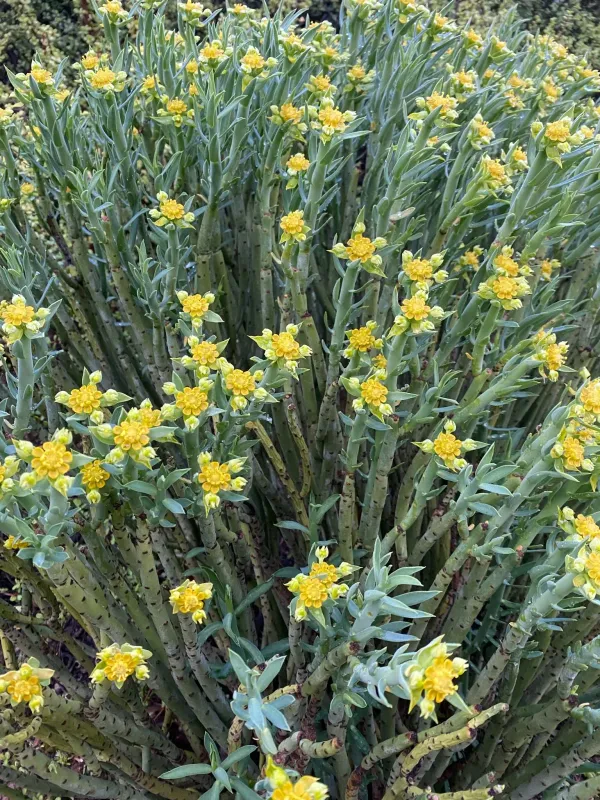
Description
Sowing dates
Propagation of Euphorbia mauritanica is primarily achieved through stem cuttings. The best time for this procedure is during the spring or early summer, ensuring the parent plant is in an active growth phase.
After cutting, the stems must be left to air-dry for several days until a callous forms at the cut end. This prevents the sap from leaking excessively and reduces the risk of bacterial or fungal infection upon planting.
Cuttings should be placed in a well-draining, sandy substrate. It is crucial to maintain minimal moisture levels in the rooting medium until roots have fully established to prevent rot in the sensitive succulent tissues.
While seed propagation is possible, it is rarely used due to low viability and slow seedling growth rates. Seeds require a consistent warm temperature and a sandy, sterile seed-starting mix to successfully germinate.
Once established, plants can be moved into larger containers or permanent locations. Careful handling is required to avoid damaging the brittle branches, which contain a caustic, milky latex sap.
Growing requirements
Euphorbia mauritanica, a member of the Euphorbiaceae family, is a succulent shrub native to the arid landscapes of South Africa. Its biology is perfectly adapted for survival in high-heat and low-water environments.
The plant demands high levels of light to maintain its structural integrity and distinct appearance. In low-light conditions, the stems tend to etiolate, becoming weak and losing their characteristic upright growth habit.
Soil requirements are relatively simple: the medium must be exceptionally well-draining. A mix of gritty soil, coarse sand, and perlite is ideal to mimic the natural rocky habitats where this species thrives.
Temperature management is critical. While it can handle intense heat, it is not frost-hardy. Cultivation in cooler climates necessitates greenhouses or moving pots indoors whenever temperatures drop below 10 degrees Celsius.
Watering needs are low. The plant relies on its succulent stems to store water during dry spells. During the growing season, watering should be deep but infrequent, allowing the soil to dry out completely between sessions.
Main diseases and pests
The most significant threat to Euphorbia mauritanica is overwatering, which leads to root and stem rot. Pathogenic fungi thrive in waterlogged soil, quickly liquefying the stems from the base upwards.
Common pests include mealybugs and spider mites. Mealybugs hide in the crevices of the succulent branches, while spider mites often target plants kept in poorly ventilated, dry indoor environments.
To mitigate disease risks, ensure proper air circulation around the plants at all times. Stagnant air combined with moisture creates an environment conducive to mold growth on the stems.
Chemical control involving systemic insecticides is effective for managing severe pest infestations. Always ensure the plants are not exposed to direct sun immediately after chemical application to prevent leaf scorch.
Good hygiene practices, such as removing debris from the base of the plant and periodically inspecting the stems, can help in the early detection and management of potential threats to the crop.