
Euphorbia maritae
Euphorbia maritae
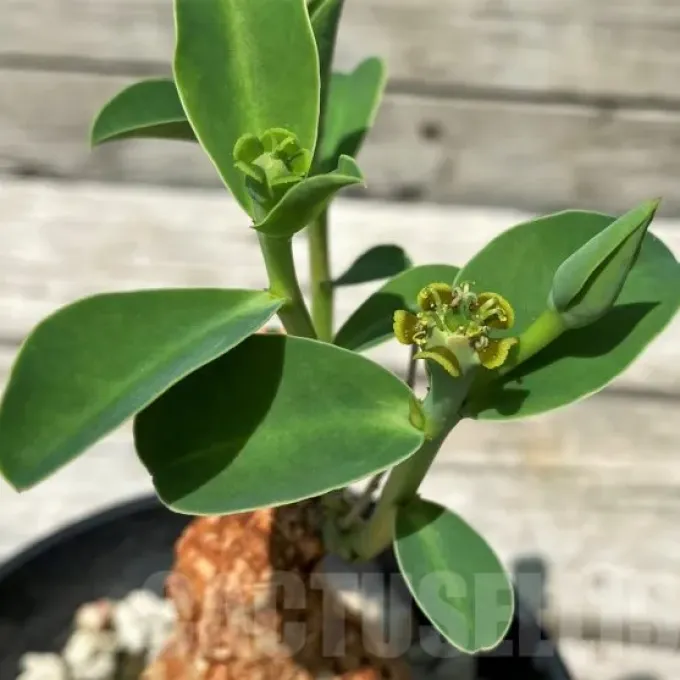
Description
Growing requirements
Euphorbia maritae belongs to the family Euphorbiaceae. This unique succulent species is native to specific regions of East Africa, particularly Tanzania. The plant is evolutionarily adapted to hot, arid environments and rocky soil conditions, which define its survival strategy.
Botanically, this species is a leaf succulent capable of storing significant moisture within its tissues. It is characterized by a specific growth habit, often forming compact, shrub-like structures with fleshy stems that protect the plant from high levels of solar radiation.
For successful cultivation of this species, it is crucial to provide conditions that closely mimic its natural habitat. The plant requires high light intensity and protection from excessive humidity, which can quickly lead to root rot and fungal infections.
The growing medium must be very light, well-draining, and slightly acidic. It is recommended to use specialized substrates with a high proportion of coarse sand or gravel to prevent water stagnation, as poor drainage is the primary cause of failure in cultivating African Euphorbias.
The temperature regime during the active growing season should be consistently high, without sharp fluctuations. During the dormant winter period, the plant requires a rest phase where watering is minimized and temperatures can be kept slightly cooler, provided they remain well above freezing.