
Corn Cob Euphorbia
Euphorbia mammillaris
Description
Growing requirements
The Corn Cob Euphorbia (Euphorbia mammillaris) is a perennial succulent shrub belonging to the Euphorbiaceae family. Its natural habitat is located in the Cape Province of South Africa, where it thrives in arid, rocky conditions.
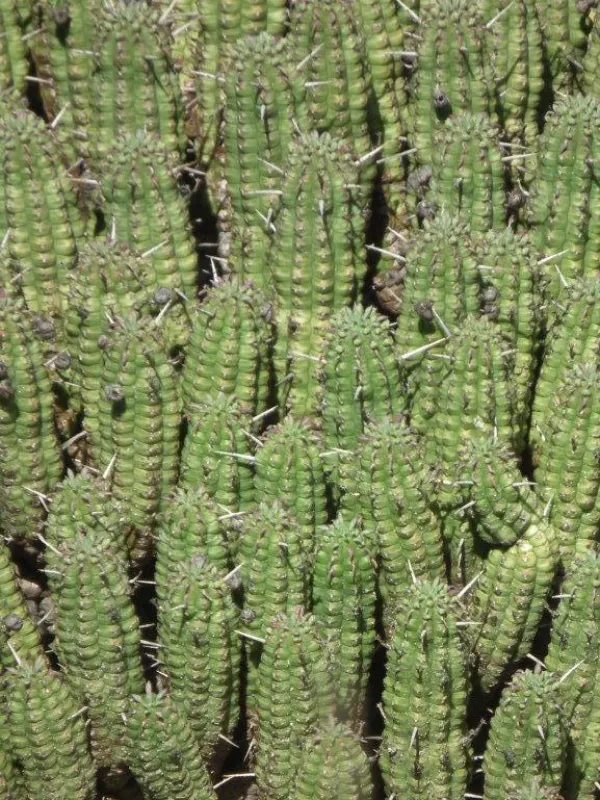
The plant is defined by its segmented, cylindrical stems that feature prominent, spirally arranged tubercles. This unique morphology helps the plant store water efficiently and creates a compact, clumping growth habit suitable for container cultivation.
To ensure healthy growth, the species requires full exposure to direct sunlight. In indoor settings, south-facing windows are ideal to prevent etiolation, which results in weak and unattractive stems that deviate from the natural shape.
The soil must be a porous, fast-draining mineral mix. A combination of coarse sand, perlite, and a small amount of potting soil is highly recommended to provide adequate aeration and prevent water stagnation at the root level.
The temperature requirements depend on the seasonal cycle. During the growing season, temperatures should range between +20°C and +28°C. A distinct dry, cool dormancy period is required during winter, ideally maintained at +10°C to +14°C.
Main diseases and pests
Root rot remains the primary threat to Euphorbia mammillaris, typically triggered by overwatering during dormancy or insufficient drainage. Once rot penetrates the internal tissues, it is often irreversible and lethal.
Mealybugs are the most common pests, often clustering in the deep crevices between the plant's tubercles. These insects are notoriously difficult to eradicate and require persistent application of systemic insecticides or manual removal.
Spider mites represent a secondary threat, particularly in environments with extremely low humidity levels. They manifest as fine webbing and lead to chlorosis or browning of the succulent tissue over time.
Fungal infections can appear as dark spots on the epidermis if air circulation is inadequate. Improving ventilation and maintaining a strict dry-down period between waterings are essential preventive cultural practices.
Regular sanitation of the growing environment, including the removal of dead plant debris and the use of sterile growing media, is crucial for minimizing the risk of outbreaks of both pathogens and pests.