
Euphorbia makallensis
Euphorbia makallensis
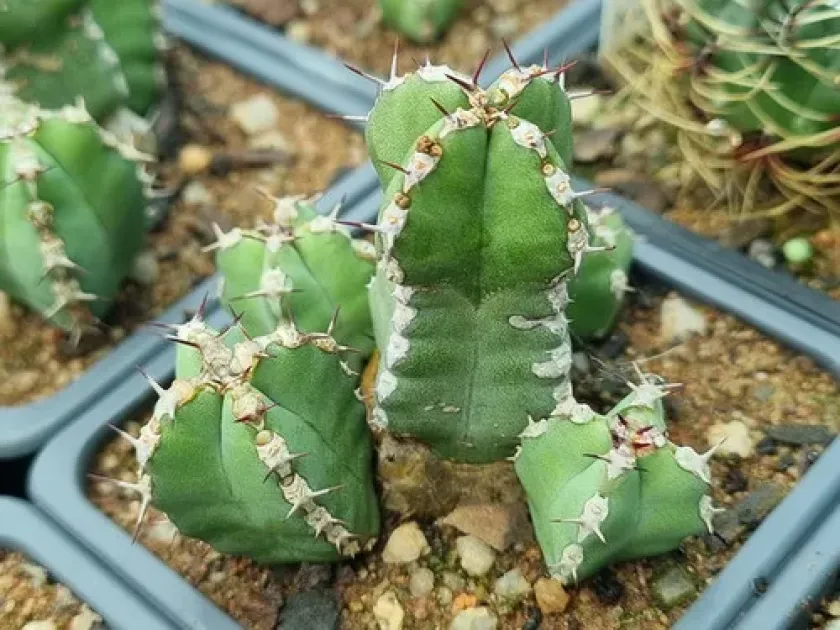
Description
Sowing dates
Euphorbia makallensis is an endemic species that requires specific propagation techniques to thrive in controlled environments. Seed sowing is conducted in greenhouses with stable high temperatures to ensure successful germination.
The optimal time for sowing is late spring, when daylight hours are at their peak, which is critical for the healthy development of young seedlings of this crop.
The soil mix for sowing must be highly drained, containing a significant proportion of sand and perlite to eliminate the risk of root rot during the early stages of growth.
Seed planting depth should be minimal, as the small seeds of the Euphorbiaceae family germinate best when positioned near the surface and lightly dusted with substrate.
After emergence, careful transplanting into individual containers is mandatory, as the plant is extremely sensitive to root damage during the repotting process.
Growing requirements
This crop belongs to the Euphorbiaceae family and originates from the arid regions of Somalia, which defines its biological and physiological requirements.
The plant is a xerophyte and requires bright, direct sunlight throughout the vegetative period to maintain its structural integrity and metabolic rate.
Temperature management is key: during summer, Euphorbia makallensis prefers temperatures above +25...+30°C, while during winter it requires dry storage at temperatures not lower than +15°C.
Soil requirements focus on impeccable drainage; waterlogging is lethal to this crop as its root system is adapted to rapidly absorbing moisture from poor, rocky substrates.
In its natural habitat, the plant grows in rocky soils, so agricultural techniques must mimic this environment to prevent fungal root diseases.
Yield
The agricultural use of Euphorbia makallensis is specialized, primarily focusing on the extraction of valuable latex compounds used in the pharmaceutical industry.
Yield efficiency is directly linked to strict irrigation and fertilization management during the summer; excess moisture leads to vegetative overgrowth at the expense of target active substances.
Maximum latex output is achieved in mature specimens aged 3 to 5 years, while the growth rate of this crop on a commercial scale is generally considered slow.
Biomass accumulation occurs gradually, which makes the economic feasibility of this crop highly specialized and dependent on specific global raw material markets.
Yield forecasts are based on lighting intensity and cultivation area, as planting density is limited by the strict light requirements of each individual plant.
Main diseases and pests
The primary biological threats to Euphorbia makallensis are fungal infections resulting from poor soil aeration and high humidity levels.
In terms of pests, mealybugs and root mealybugs pose the greatest danger, as they spread rapidly in greenhouse conditions and quickly drain the plant's vitality.
Spider mites can damage the stem epidermis during periods of stagnant air, which leads not only to aesthetic loss but also to a decrease in latex productivity.
Disease prevention involves strict adherence to dry wintering conditions and the use of copper-based fungicides at the first sign of stem infection.
- Regular inspection of the root collar.
- Monitoring of substrate moisture levels.
- Isolation of infected specimens.
Harvesting
Latex harvesting is performed by making precise, shallow incisions on the stem during the period of active vegetation to obtain the maximum volume of sap.
Harvesting tools must be sterilized to prevent the contamination of the plant's vascular tissues with pathogenic microorganisms following the incision.
After sap collection, the incision sites are treated with charcoal or specialized protective sealants to accelerate the healing process of the tissues.
The collected latex requires immediate preservation or primary processing, as the biologically active substances contained within it are prone to rapid oxidation.
Harvesting frequency is strictly limited by the plant's recovery rate, and total harvesting is only possible once the plant reaches its maximum life cycle potential.