
Euphorbia lugardiae
Euphorbia lugardiae
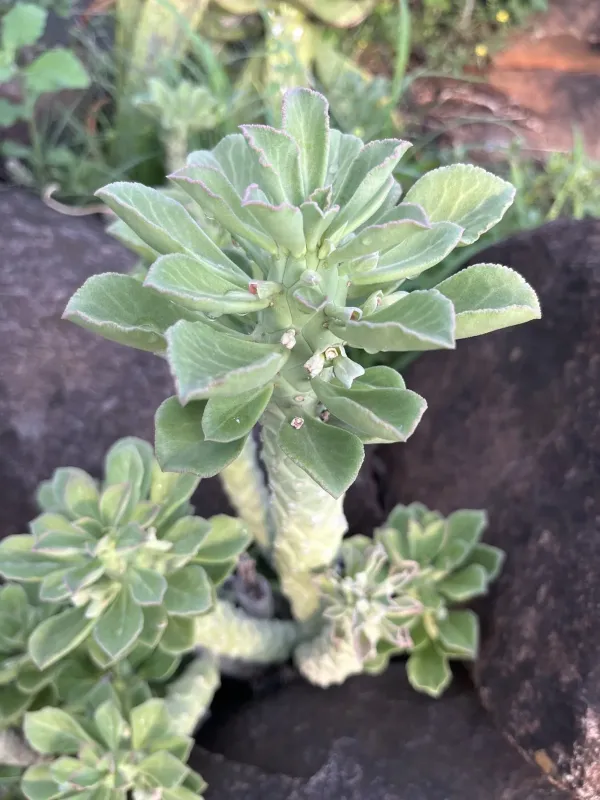
Description
Sowing dates
Euphorbia lugardiae belongs to the Euphorbiaceae family, a group known for its highly specialized succulent species. Propagation typically occurs via seeds in its native African habitat during the brief rainy seasons.
Cultivation requires a well-draining substrate composed primarily of pumice, coarse sand, and a fraction of organic matter. The seeds need warmth, typically between 22 and 26 degrees Celsius, to trigger germination.
Seed sowing is done by surface-sowing on a moist medium, as the seeds require sufficient light for initial development. The containers must be kept in a controlled environment to maintain steady moisture levels.
Once seedlings develop, they should be gradually acclimated to lower humidity levels to encourage the growth of robust stems. Careful handling is essential, as the seedlings are sensitive to root disturbance.
Vegetative propagation via cuttings is possible but requires a drying period for the cut surface to callus, preventing sap leakage and potential infection during the rooting process.
Growing requirements
This species is a xerophyte native to arid regions in Southern Africa. It requires full sunlight exposure throughout the day to maintain its compact and healthy growth pattern.
Soil requirements focus on drainage. The medium must be inorganic and porous to prevent water from remaining in contact with the stem base, which is prone to rot.
Watering frequency should be reduced significantly during the winter months, allowing the plant to enter its natural dormancy. Overwatering is the most common cause of failure in cultivation.
Temperature management involves keeping the plant in a warm environment, ideally above 15 degrees Celsius. It does not tolerate frost or cold, damp conditions under any circumstances.
Good ventilation is critical. Stagnant air increases the risk of fungal pathogens settling on the plant's surface, which can cause disfigurement and health decline.
Main diseases and pests
Root and stem rot remain the primary threats to Euphorbia lugardiae. These diseases are almost always associated with poor soil drainage and excessive humidity in the root zone.
Mealybugs are the most common insect pests, often found in the crevices of the stem. They feed on plant sap and can weaken the specimen significantly if left unchecked.
Spider mites may appear during periods of low air humidity and extreme heat. They cause fine webbing and discoloration of the succulent skin, leading to reduced photosynthetic activity.
Scale insects can also infest this species, creating small, hard bumps on the stem. Removal of these pests should be done carefully to avoid damaging the delicate epidermis.
Integrated pest management, involving regular physical inspection and the use of targeted systemic treatments, is the most effective approach for maintaining plant health.