
Euphorbia lenewtonii
Euphorbia lenewtonii
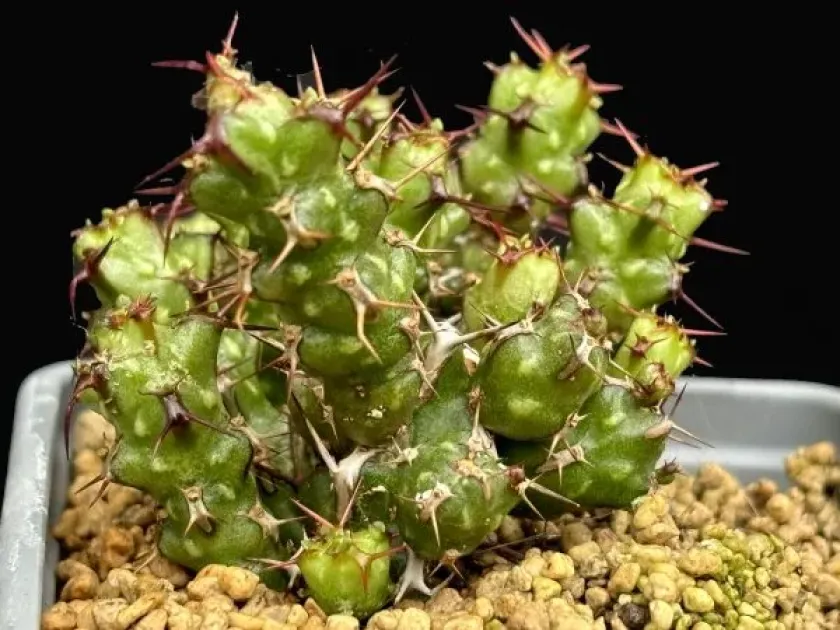
Description
Growing requirements
Euphorbia lenewtonii is a distinctive succulent shrub belonging to the Euphorbiaceae family, originating from the arid regions of Tanzania, where it thrives in specialized niches.
This species is highly adapted to water scarcity, possessing specialized succulent stems that allow it to survive prolonged droughts in its native habitat.
When cultivated, the plant requires a highly porous and inorganic growing medium, typically composed of coarse sand, pumice, and minimal organic matter to ensure rapid drainage.
Full sun exposure is non-negotiable for the healthy development of Euphorbia lenewtonii, as low light levels lead to etiolated, weak growth and diminished natural resistance.
Maintenance of high temperatures is essential for active growth, as this tropical succulent is extremely sensitive to chilling temperatures and frost damage.
Main diseases and pests
Root rot is the primary physiological threat to the plant, usually caused by overwatering or the use of heavy, water-retentive substrates that remain damp for extended periods.
Common pests associated with this species include mealybugs and spider mites, which can proliferate rapidly if the surrounding air becomes too stagnant and dry.
Fungal infections can quickly compromise the integrity of the stems, leading to necrosis; these often appear as dark, spreading lesions on the epidermis of the plant.
Integrated pest management should focus on mechanical removal and the use of targeted systemic treatments applied only when infestations are positively identified.
Prevention remains the most effective management strategy, utilizing quarantine measures for new specimens and ensuring the cultivation environment mimics natural arid conditions.