
Euphorbia ledienii
Euphorbia ledienii
Description
Growing requirements
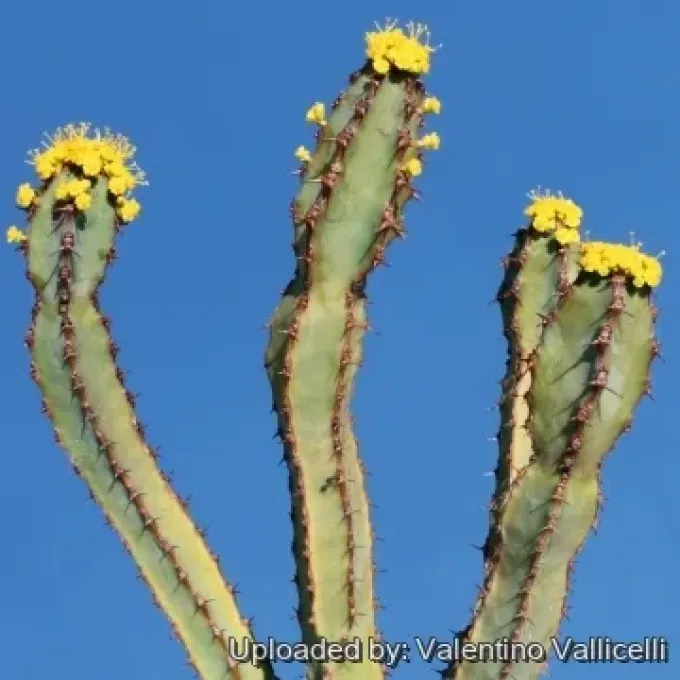
Euphorbia ledienii is a distinct species of succulent belonging to the Euphorbiaceae family. Native to the arid regions of Southern Africa, this plant has evolved to survive in harsh, moisture-deprived environments, developing thick, ribbed stems for water storage.
Botanically, it is characterized by its succulent habit, forming multi-branched, column-like structures. In its natural habitat, it can form large, dense colonies, while in garden or indoor environments, it is appreciated for its striking architectural presence.
The plant thrives in bright, direct sunlight. When grown indoors, it requires a location with maximum exposure to light, as insufficient illumination leads to etiolation and a weakened physical structure.
The substrate must be exceptionally well-draining, mimicking the rocky, sandy soils of its native habitat. A mixture of pumice, coarse sand, and a small amount of organic material is typically recommended for container cultivation.
Watering requirements follow the seasonal cycle: during the growing season, water thoroughly but infrequently, allowing the substrate to dry out completely. During winter dormancy, reduce watering to a minimum to prevent physiological distress.
Main diseases and pests
The most significant threat to the survival of Euphorbia ledienii is the development of root and stem rot caused by excessive soil moisture and poor drainage. This condition is often irreversible once it reaches the vascular tissue.
Insect pests, specifically mealybugs and spider mites, are common issues. These pests tend to colonize the crevices between the ribs of the stems, making them difficult to detect without careful inspection.
Regular sanitation is essential; cleaning the stems with a soft brush and, if necessary, applying systemic insecticides can keep pest populations under control and prevent infestation spread.
Fungal infections can also be exacerbated by high humidity and poor ventilation. Keeping the plant in a space with adequate airflow significantly reduces the risk of pathogens settling on the epidermis.
Handling requires caution due to the toxic milky latex found throughout the plant's tissues. Always wear protective gear when trimming or repotting to prevent allergic reactions or chemical burns from contact with the sap.