
Laristan Spurge
Euphorbia larica
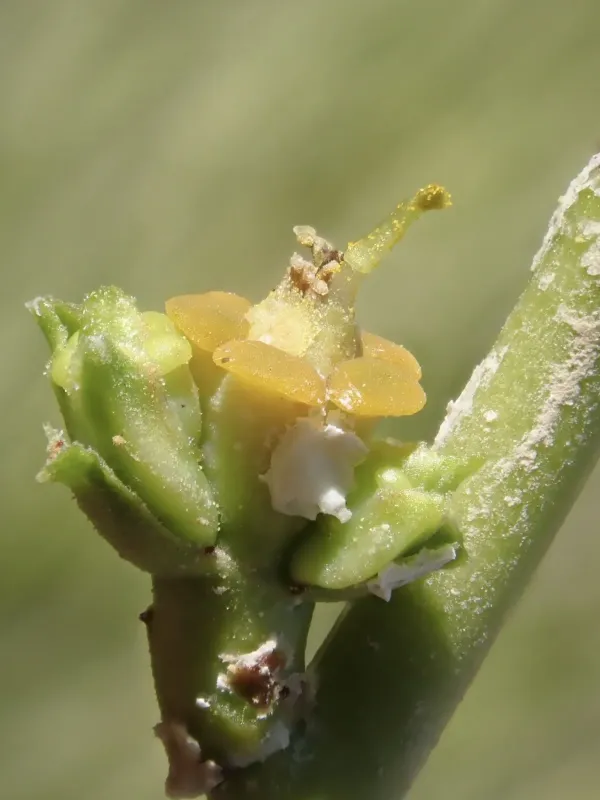
Description
Growing requirements
Laristan Spurge is a perennial succulent shrub belonging to the Euphorbiaceae family. It is native to the arid mountainous regions of Iran, where it has evolved to thrive in rocky environments with minimal moisture and intense sunlight.
Botanically, the plant is characterized by a dense, branching structure capable of storing significant water reserves. Its ability to tolerate long periods of drought makes it a unique candidate for xerophytic agricultural research in arid zones.
Optimal growth conditions require direct, full sunlight and well-draining soil. The plant does not tolerate heavy, water-retentive clay soils, which can quickly lead to root decay and the death of the specimen.
Cultivation practices involve minimal intervention. As a drought-adapted plant, it requires deep but infrequent watering during its active growing season, and it should remain almost completely dry during the dormant period.
Economic uses for this species are currently focused on sustainable landscaping in arid climates and research into its chemical composition. It is a promising crop for regions struggling with desertification and water scarcity.
Main diseases and pests
The plant is naturally resistant to many pests due to its caustic, toxic milky sap, which acts as a powerful chemical defense mechanism against most herbivores and insects.
The primary threat to the crop is root rot caused by improper drainage and waterlogged soil conditions. This is the most common cause of crop loss in improperly managed agricultural settings.
Under artificial conditions like greenhouses, susceptibility to fungal diseases increases if humidity levels remain too high for extended periods, preventing the soil from drying out.
Occasionally, mealybugs or spider mites may pose a challenge if the plants are stressed due to lack of adequate light or poor ventilation, though these instances are rare in healthy open-air crops.
To ensure high health standards, farmers should prioritize strict irrigation control and ensure the plants are grown in well-ventilated locations with excellent soil aeration.