
Euphorbia lamprocarpa
Euphorbia lamprocarpa
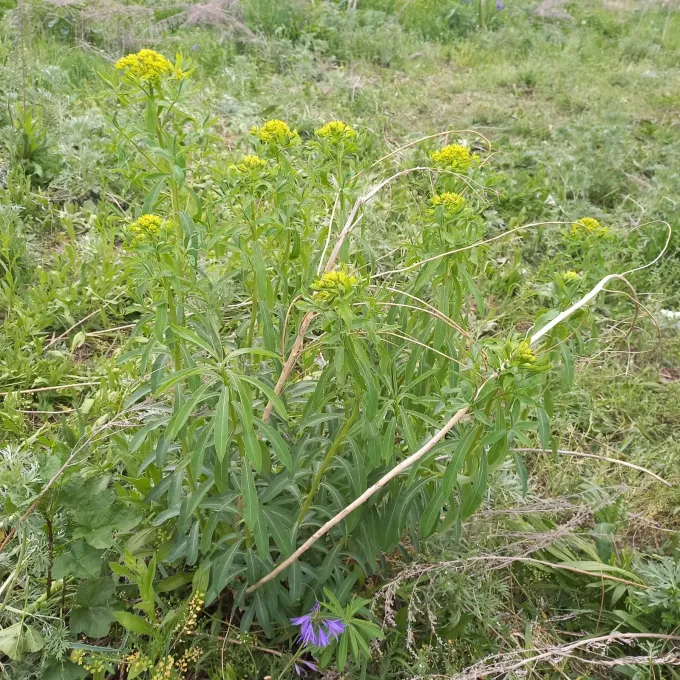
Description
Growing requirements
Euphorbia lamprocarpa is a perennial herbaceous plant belonging to the diverse Euphorbiaceae family. This species is notable for its latex-containing tissues, which serve as a natural defense mechanism against herbivores and environmental stressors, reflecting its evolutionary adaptation.
The native habitat of this plant includes arid and semi-arid regions of Central Asia. It thrives in environments characterized by significant thermal amplitude and limited rainfall, showcasing a remarkable ability to survive in harsh climatic conditions where other crops would fail.
Botanically, the plant features erect stems and linear to lanceolate leaves. Its reproductive strategy involves cyathia, which are specialized inflorescences that facilitate efficient pollination through the attraction of diverse insect species in sparse environments.
Optimal cultivation requires well-drained, sandy or gravelly soils that prevent waterlogging. As a drought-tolerant species, it demands full sun exposure to maintain its metabolic activity and structural integrity throughout the growing season.
In terms of agricultural and industrial utility, Euphorbia lamprocarpa is primarily researched for its chemical composition and potential for biochemical production. Its hardiness also makes it a subject of interest for sustainable land restoration projects in degraded dryland ecosystems.