
Euphorbia knobelii
Euphorbia knobelii
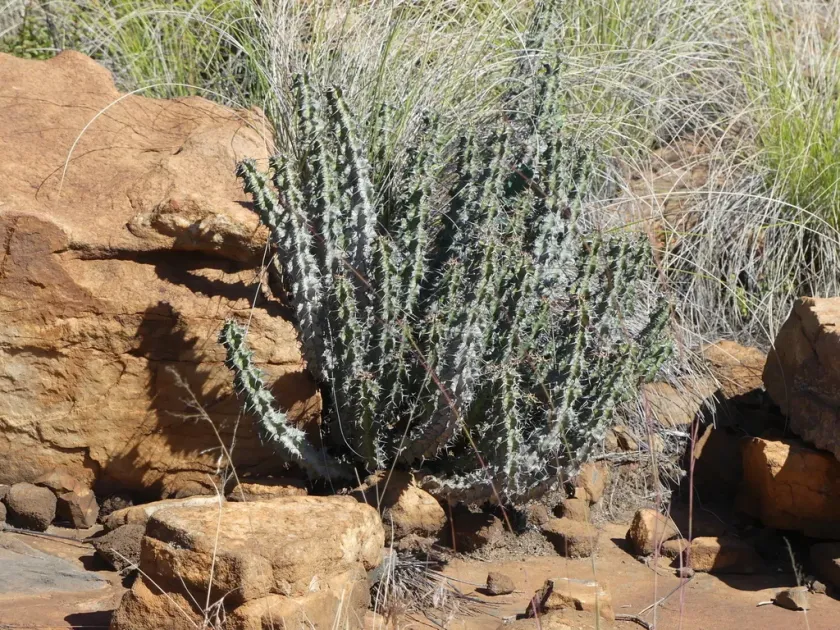
Description
Growing requirements
Euphorbia knobelii is a rare and distinct succulent species belonging to the Euphorbiaceae family. Originating from specific rocky habitats in Africa, it has evolved to survive in nutrient-poor environments with limited annual precipitation.
The plant exhibits unique physiological characteristics, including a succulent stem adapted for water storage, which allows it to withstand prolonged droughts. In an agricultural setting, it requires conditions that strictly mimic its native climate.
Sunlight exposure is the most critical factor for healthy growth; the plant thrives under high light intensities, which are necessary for maintaining its structural integrity and metabolic activity throughout the growing season.
The soil structure must be porous, typically consisting of a coarse mineral-based mix to ensure rapid water drainage. Any water retention at the root zone acts as a primary stressor and can lead to rapid decay of the vascular system.
Temperature management should prioritize avoiding conditions below 10 degrees Celsius, as the species is highly sensitive to cold, especially when the substrate contains moisture.
Main diseases and pests
The primary agronomic threat to Euphorbia knobelii is root rot, which is almost exclusively caused by improper irrigation practices or poor soil drainage. This condition is often irreversible once symptoms appear.
Pests such as mealybugs represent a persistent challenge, as they hide in the crevices of the stem and can quickly overwhelm a plant, weakening it through the constant extraction of plant sap.
Spider mites are another common concern in indoor cultivation, particularly during periods of low humidity, as they feed on the epidermis of the succulent and cause unsightly scarring.
Fungal infections can proliferate in greenhouses lacking sufficient ventilation. Preventing stagnant air is key to ensuring that the stems remain dry and free from opportunistic pathogens.
Integrated pest management, including regular inspection and the use of insecticidal soap or biological controls, is essential for maintaining a healthy crop without damaging the plant's delicate outer tissues.