
Kerner's Spurge
Euphorbia kerneri
Description
Growing requirements
Kerner's Spurge (Euphorbia kerneri) is a perennial herbaceous plant belonging to the Euphorbiaceae family. It is native to the mountain regions of Southern Europe, typically thriving in limestone-rich soils and rocky terrain, which dictates its specific habitat requirements.
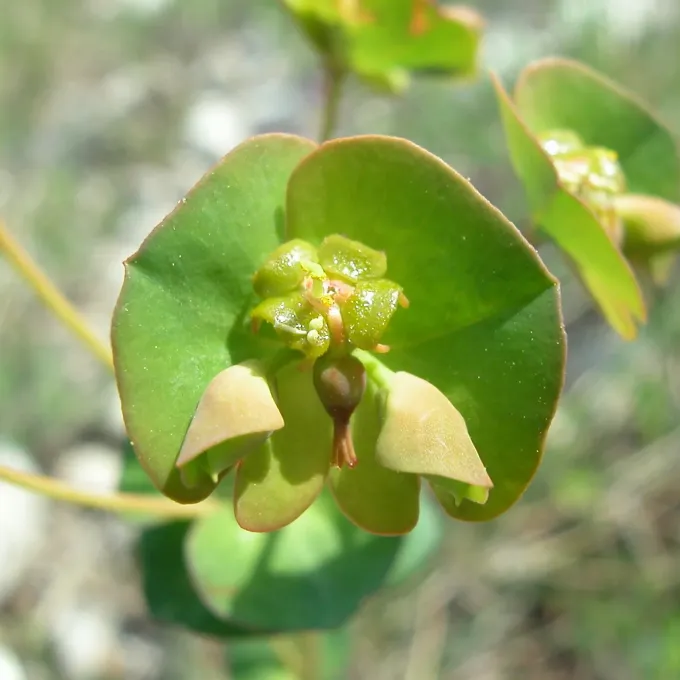
The plant is distinguished by its complex inflorescences, known as cyathia, and a milky latex that contains various organic compounds. Its botanical structure makes it a resilient species capable of surviving in harsh environmental conditions where many standard crops fail.
Optimal cultivation requires well-drained, alkaline to neutral soils. As a drought-tolerant plant, it is highly suited for agricultural regions characterized by scarce precipitation, provided that the soil structure prevents water stagnation, which is detrimental to its roots.
Regarding climate, the plant demands significant sunlight to maintain its physiological functions and promote secondary metabolite production. Excessive humidity or prolonged cold weather can significantly inhibit growth and development during the vegetative phase.
Agricultural management should prioritize soil preparation to ensure aeration. Weed control during the early stages of development is crucial, as the plant grows relatively slowly and struggles to compete with faster-growing invasive vegetation.
Main diseases and pests
The most common fungal threats to Kerner's Spurge include powdery mildew and rust, which often emerge when environmental humidity exceeds optimal levels, leading to leaf damage and reduced biomass production.
Pests such as aphids and spider mites are frequently observed on the foliage, where they feed on sap. These insects not only weaken the plant but can also serve as vectors for various plant viruses.
Root system vulnerability during the seedling stage is a key area of concern for growers, as soil-borne pathogens can cause rapid collapse in poorly drained or overly acidic soil conditions.
Integrated pest management strategies are recommended, focusing on cultural practices such as spacing and proper irrigation management to mitigate the need for intensive chemical applications.
Monitoring the plant for early signs of infection or infestation allows for targeted intervention, ensuring that the final crop yield remains free of residues that might negatively impact its subsequent industrial or pharmaceutical use.