
Euphorbia isthmia
Euphorbia isthmia
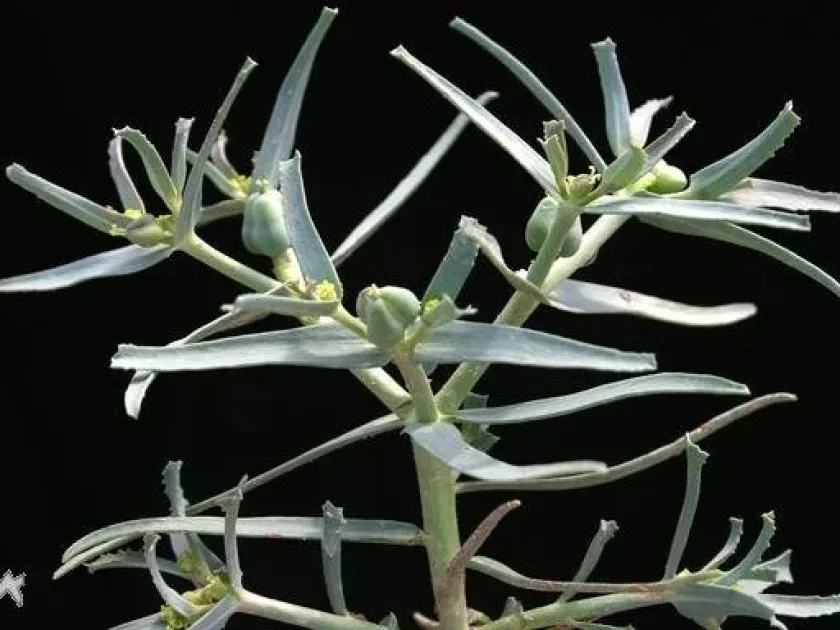
Description
Growing requirements
Euphorbia isthmia is a succulent plant belonging to the Euphorbiaceae family. This species originates from arid regions, where it has evolved to thrive in rocky environments with high sun exposure and minimal moisture availability.
The plant requires full sun conditions to maintain its compact and healthy growth. When cultivated in agricultural or greenhouse settings, it needs high-intensity light levels to prevent etiolation, which is common in succulents kept in shaded areas.
The substrate must be extremely porous and well-draining. A typical mix includes coarse sand, pumice, and a small amount of mineral-rich soil. Avoiding water retention around the root neck is critical to the survival of this species.
Temperature management is crucial; Euphorbia isthmia prefers a warm climate with daytime temperatures between 22 and 30 degrees Celsius. It is highly sensitive to cold, and temperatures falling below 10 degrees Celsius can cause irreversible damage to its cell structure.
Agrotechnical maintenance focuses on a strictly controlled irrigation cycle. The plants should be watered thoroughly but infrequently, allowing the substrate to dry out completely between watering sessions to emulate natural dry-season conditions.
Main diseases and pests
Root rot is the primary threat to Euphorbia isthmia, usually caused by overwatering or poor drainage. Once internal tissue decay begins, it is often difficult to save the specimen, necessitating the removal of affected parts and immediate drying.
Mealybugs are the most common pests found on this succulent. They nest in the crevices of the stem, protected by their waxy secretions, making manual removal or systemic pesticide applications necessary for control.
Spider mites can become an issue in environments with low humidity and high heat. They feed on the epidermis, creating unsightly marks and reducing the plant's vigor, which can make it susceptible to secondary infections.
Fungal pathogens such as Botrytis may attack the plant if air circulation is insufficient. Ensuring that the greenhouse has active ventilation helps keep the surface of the plant dry and less prone to airborne spores.
Regular monitoring of the root ball and stem is essential. Early intervention with specialized treatments ensures the longevity of the plant, especially when it is being managed in a controlled nursery production system.