
Candelabra tree
Euphorbia ingens
Description
Growing requirements
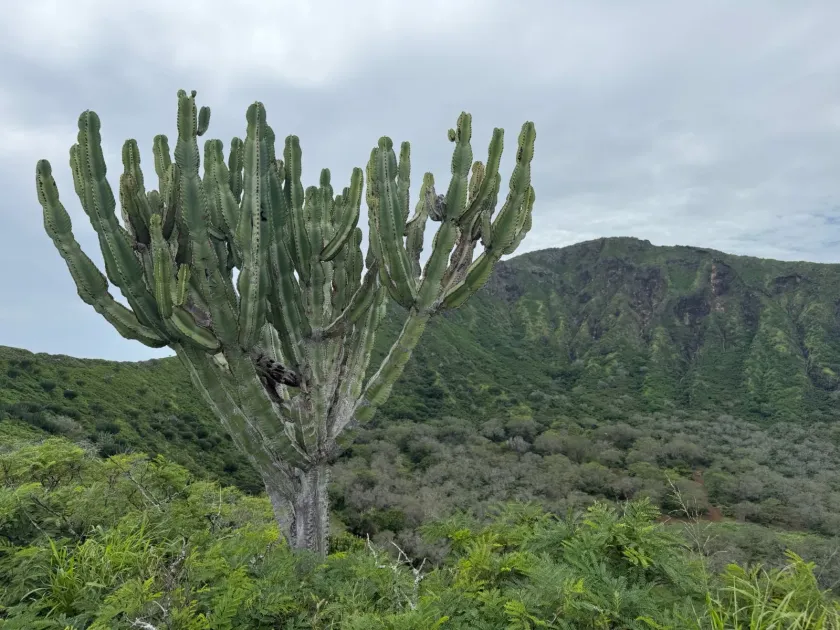
The Candelabra tree (Euphorbia ingens) belongs to the Euphorbiaceae family and is a prominent succulent species native to the tropical and southern regions of Africa. It is characterized by its large, tree-like growth habit and branching structure that resembles a candelabra.
In its natural habitat, the plant thrives in arid and semi-arid conditions, often found in rocky terrains and dry savannas. Its physiological structure is highly specialized for water storage, allowing it to withstand long periods of drought.
To cultivate Euphorbia ingens successfully, growers must provide a well-draining, gritty soil mix, typically consisting of sand, pumice, and minimal organic matter. Soil aeration is critical to prevent root suffocation.
The plant requires high light intensity and warm temperatures to maintain its structural integrity and health. In temperate climates, it is strictly an indoor or greenhouse plant that needs protection from frost, as even mild temperatures below 10 degrees Celsius can cause damage.
Propagation is primarily achieved through stem cuttings. Due to the high toxicity of the milky latex sap, handling the plant requires gloves and protective eyewear to prevent severe skin irritation or eye injury during pruning or transplanting.
Main diseases and pests
Common pests affecting Euphorbia ingens include mealybugs and spider mites, which can easily multiply in dry indoor environments if not monitored regularly.
Fungal infections, particularly stem rot, are the most severe threat to this culture. They are almost exclusively caused by overwatering or poor soil drainage, leading to the rapid decay of the internal tissue.
Effective management involves a strict watering regimen that allows the soil to dry out completely between sessions. During the winter dormancy period, watering should be significantly reduced or suspended entirely.
If rot is detected, it is often necessary to excise the infected area and allow the wound to callous before repotting. Fungicidal treatments can be applied to cuts, but prevention through climate control remains the most reliable strategy.
Cultural hygiene, including removing fallen debris and keeping the surface of the soil clean, plays a significant role in reducing the risk of pest outbreaks in commercial greenhouse settings.