
Euphorbia inermis
Euphorbia inermis
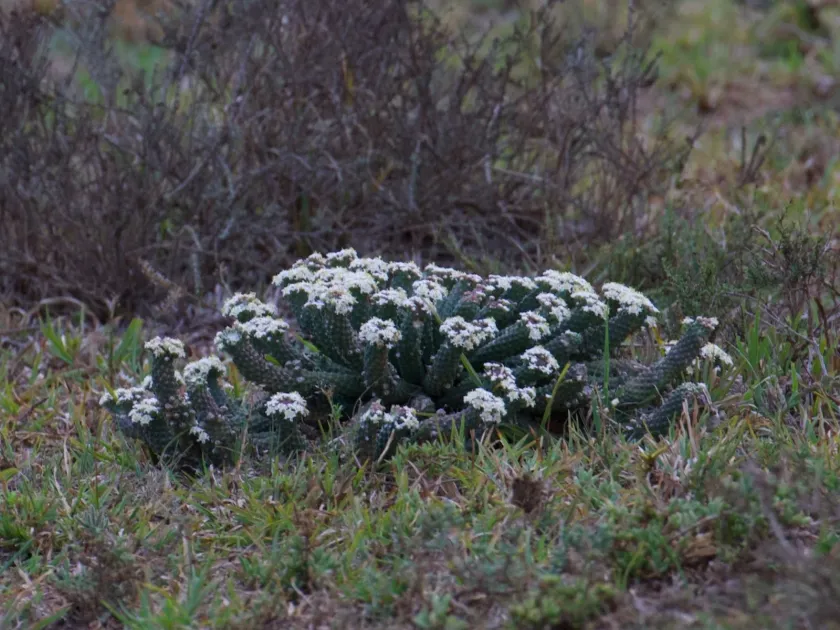
Description
Sowing dates
Euphorbia inermis is typically propagated through seeds sown in late spring, requiring a consistent temperature of +22°C to +25°C. The substrate must be highly porous and well-draining to prevent seed rot.
Vegetative propagation involves removing lateral offsets, which must be dried in a shaded, ventilated area for several days to allow the callous to form before planting in a gritty medium.
Seedlings require very careful watering, ideally applied through the tray rather than from above to keep the plant bodies dry and healthy during their initial growth stages.
Successful establishment of new plants depends on bright, indirect light and the avoidance of rapid environmental changes, which can cause significant stress to the young root systems.
Repotting should be performed during the active growing season, ensuring the pot size is just slightly larger than the root ball to prevent unnecessary moisture retention in the soil.
Growing requirements
As a member of the Euphorbiaceae family, Euphorbia inermis originates from arid regions of South Africa. It is a slow-growing succulent that thrives in harsh, rocky environments.
The plant demands high levels of natural light to maintain its characteristic compact, symmetrical appearance. In low-light conditions, it quickly etiolates, losing its natural form.
Soil composition should strictly follow the requirements for desert succulents, focusing on mineral components like pumice, coarse sand, and minimal organic matter to ensure aeration.
Temperature control is vital: the plant prefers warm summer months and a cool, dry winter dormant period. Exposure to temperatures below +10°C during wet conditions is usually fatal.
Watering must be strictly seasonal. During the summer, wait until the substrate is completely dry before re-watering, and keep the plant almost entirely dry throughout the winter months.
Main diseases and pests
The most common disease is root rot caused by stagnant water in the soil. Once the roots are compromised, the plant often cannot be saved, making preventative drainage management the top priority.
Mealybugs are the primary pest for this species. These insects hide in the tight clusters of the plant’s branches, making manual cleaning with an alcohol-soaked swab necessary for control.
Spider mites may infest the plant during hot, low-humidity periods. Regular inspection of the plant's growth points is essential for early detection and mitigation of these pests.
Fungal infections can manifest as black or brown spots on the skin. These are often signs of improper air circulation, which should be improved immediately to prevent further spread.
The milky sap of the plant is toxic and acts as a natural deterrent, but it also means that any physical damage to the skin of the plant creates an entry point for secondary infections.