
Euphorbia inconstantia
Euphorbia inconstantia
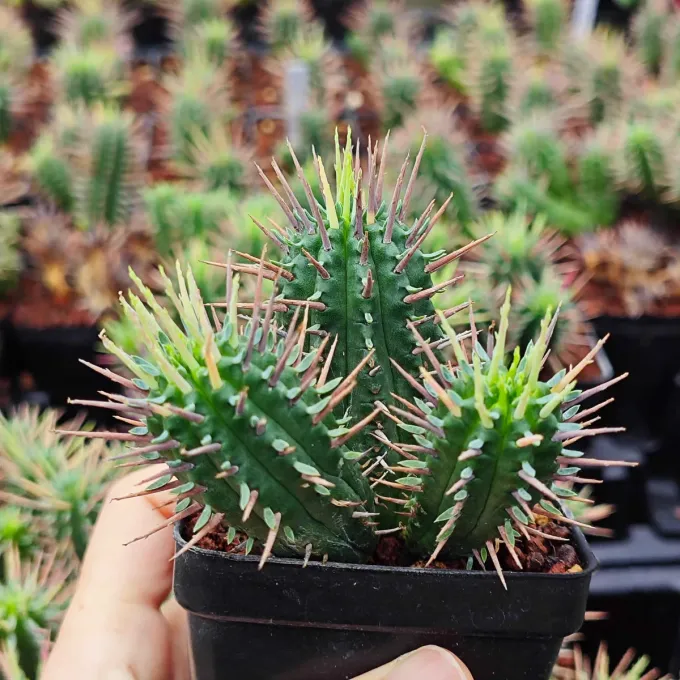
Description
Growing requirements
Euphorbia inconstantia is a member of the Euphorbiaceae family, characterized by its remarkable resilience to arid environments. This perennial plant is highly specialized for survival in regions with sparse rainfall, making it an object of study for sustainable agriculture in dry climates.
The plant thrives in well-drained, sandy or gravelly soils that provide adequate aeration for its deep root system. It is intolerant of waterlogged conditions, which can lead to rapid decay of the plant's delicate vascular tissues, thus necessitating careful site selection.
Optimal light exposure is essential for the development of Euphorbia inconstantia. High levels of direct solar radiation promote the accumulation of metabolites and ensure the proper growth cycle of the plant. Shade-grown plants often exhibit weakened stems and lower overall productivity.
Climate requirements include warm, stable temperatures, as the plant is not frost-tolerant. It exhibits high physiological efficiency in high-heat conditions, retaining water effectively through its specialized cuticle and storage tissues, which minimizes transpiration losses during the peak of summer.
In industrial and agricultural contexts, the crop is valued for its latex-producing properties. Ongoing research explores the extraction of hydrocarbons and various chemical compounds from its biomass for use in specialized industrial applications, contributing to the development of bio-based materials.
Main diseases and pests
The most significant threat to Euphorbia inconstantia is the prevalence of root-rot fungi, typically caused by excess irrigation or poor field drainage. Preventing soil compaction and ensuring rapid water drainage are the primary defense strategies against these soil-borne pathogens.
Spider mites and various aphid species represent the primary insect threats, particularly in arid climates where they target succulent tissues to access nutrient-rich fluids. These pests weaken the plant, leading to stunted growth and lower yield quality.
Powdery mildew is a recurring challenge, especially if the planting density is too high, leading to stagnant air conditions. Proper spacing and airflow management within the field are critical practices to mitigate the rapid spread of fungal spores across the crop canopy.
Root-boring larvae can compromise the structural integrity of the plant, often remaining undetected until the infestation becomes severe. Regular inspections of the base of the stems are necessary to identify early signs of damage and implement localized treatments.
Adopting an integrated pest management (IPM) approach is vital for the health of the plantation. This includes scouting programs, the use of resistant varieties where available, and strictly adhering to seasonal crop rotation schedules to reduce pathogen survival rates in the soil.