
Euphorbia inarticulata
Euphorbia inarticulata
Description
Growing requirements
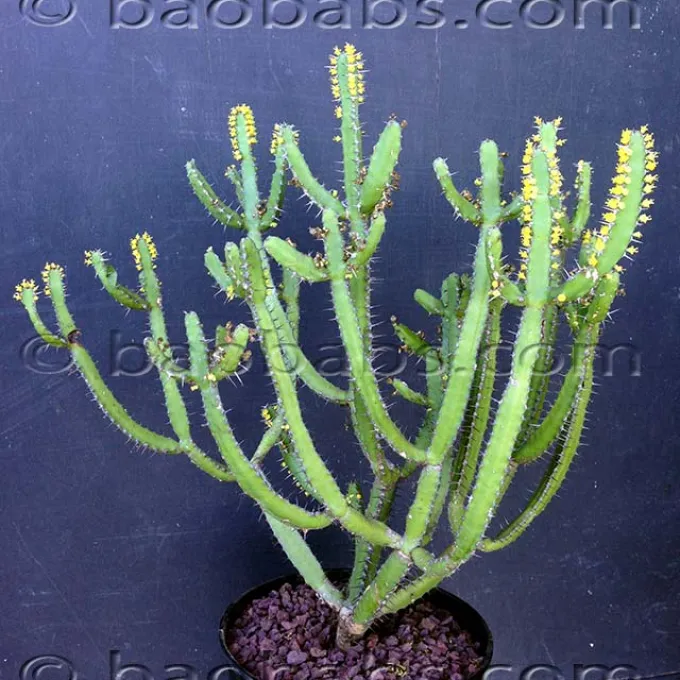
Euphorbia inarticulata is a distinct succulent species belonging to the Euphorbiaceae family, recognized for its non-articulated, robust stem structure. This plant is uniquely adapted to high-temperature, arid environments.
Originating from the rugged landscapes of Ethiopia, this species has evolved to store significant amounts of water, allowing it to survive prolonged droughts in its natural habitat.
Botanically, the plant features a smooth or slightly ribbed epidermis, distinguishing it from other species that exhibit clearly segmented or "jointed" growth patterns. This structure minimizes the surface area exposed to intense heat.
Cultivation requires full solar exposure and well-draining soil mixtures that replicate rocky, sandy desert conditions. Excessive organic matter in the substrate is discouraged as it retains moisture for too long.
Agronomic management focuses on "dry-growing" techniques. During the active growth season, water should be applied only when the soil has completely dried out to ensure the root system remains healthy.
Main diseases and pests
The most common threats to Euphorbia inarticulata involve environmental stress caused by improper moisture management, which leads to physiological damage.
Fungal infections, specifically those resulting in soft rot, are a primary concern. These pathogens thrive in stagnant, humid conditions that are unsuitable for this succulent.
Pests such as spider mites and mealybugs are frequently observed on the surface of the stems. These pests can cause localized tissue death if left uncontrolled.
Integrated pest management protocols recommend mechanical removal of pests followed by the application of mild horticultural oils if infestations are detected.
Maintaining adequate air circulation is the most effective preventative strategy against both fungal pathogens and common greenhouse pest outbreaks.