
Unequal-leaved spurge
Euphorbia inaequilatera
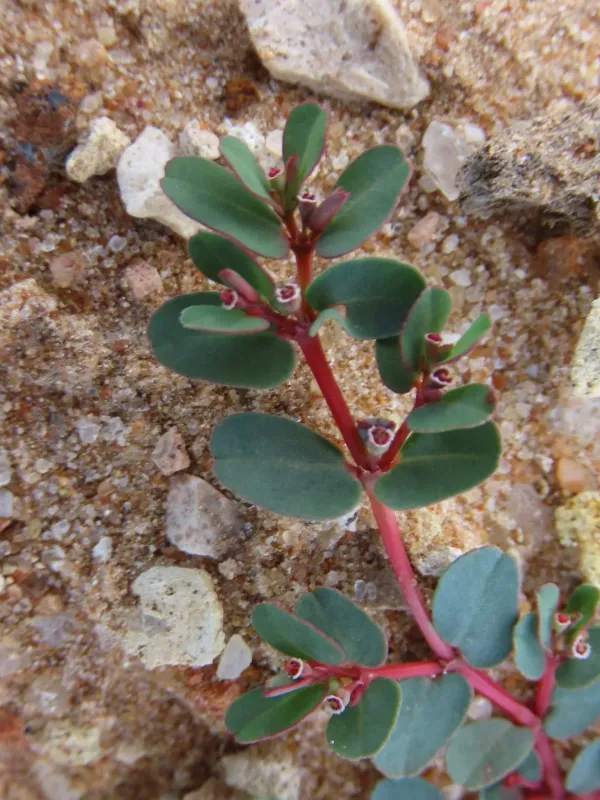
Description
Growing requirements
Euphorbia inaequilatera, commonly known as the unequal-leaved spurge, is an annual herb belonging to the Euphorbiaceae family. It is characterized by its prostrate growth habit, forming low, spreading mats across the soil surface.
Native to warmer regions, this species has become a widespread invasive weed in many agricultural areas. It thrives in disturbed habitats, including arable fields, roadsides, and neglected agricultural land where competition for light is reduced.
The plant is highly drought-tolerant, making it a persistent problem in arid and semi-arid farming conditions. It grows exceptionally well in well-drained, sandy, or stony soils where other species may struggle to establish.
Sunlight exposure is a critical factor for the development of the unequal-leaved spurge. It excels in open fields with full sun exposure, rapidly colonizing bare soil and creating dense patches that compete with emerging crops.
Agronomically, this species is noted for its rapid reproductive cycle. It produces a large number of seeds within a short timeframe, ensuring its persistence in the seed bank and posing a long-term challenge for weed management programs.
Main diseases and pests
The primary threat posed by this weed is crop yield reduction through intense competition for moisture and nutrients. Its deep taproot allows it to survive in conditions that are stressful for many common cereal or vegetable crops.
The presence of toxic latex in the plant tissues renders it hazardous if incorporated into forage or hay. Ingestion by livestock can cause severe gastrointestinal distress and toxic effects, lowering the overall quality of agricultural feed.
Euphorbia inaequilatera acts as an alternative host for various viral pathogens. These pathogens can be transmitted to commercial crops by insect vectors such as aphids, leading to significant outbreaks in fields near infestation sites.
Control is challenging due to the plant's prostrate morphology, which often allows it to evade mechanical cultivation techniques. Standard weeding equipment may fail to remove the root system, leading to regrowth.
Integrated pest management (IPM) is essential for effective control. This includes the application of systemic herbicides at early growth stages and the use of competitive crop varieties that can shade out the spurge before it establishes dominance.