
Prostrate spurge
Euphorbia humifusa
Description
Growing requirements
Prostrate spurge (Euphorbia humifusa) is a member of the Euphorbiaceae family. It is recognized in agriculture as a troublesome weed that affects row crops, turf, and nursery operations due to its aggressive growth habit and high seed production.
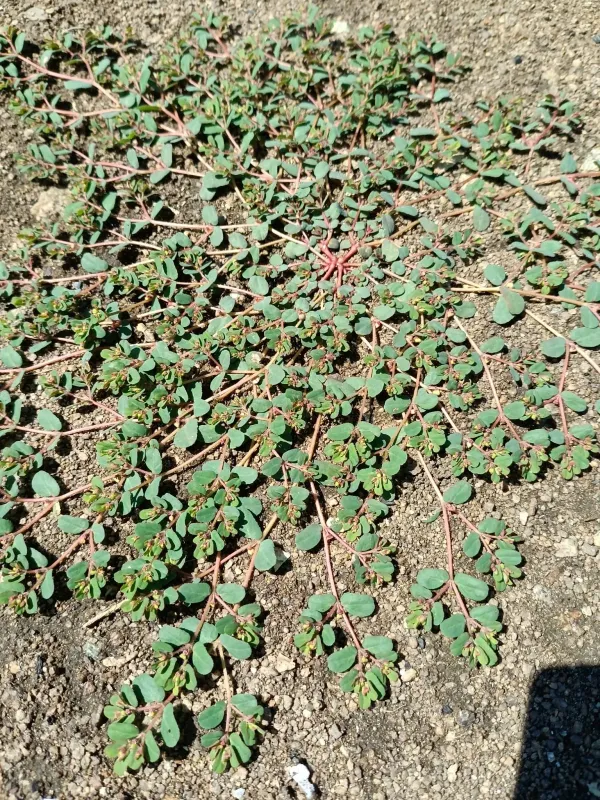
Originating from parts of Asia, this species has become a global invader. It is characterized by its prostrate, mat-forming growth, which allows it to thrive in open spaces where it can easily outcompete slow-growing crops for light and soil space.
The plant features small, opposite leaves and a central taproot. A key biological feature is the milky latex sap present in all parts of the plant, which is known to be toxic to many animals and can cause skin irritation in humans during manual weeding.
It prefers well-drained, sandy, or disturbed soils and is highly tolerant of drought and extreme heat. These environmental requirements make it particularly difficult to manage in dryland farming systems where irrigation is limited.
Agronomic management involves a combination of pre-emergent and post-emergent herbicide applications, alongside mechanical tillage. Because the seeds are persistent in the soil seed bank, long-term rotation strategies are essential to keep populations at a manageable level.
Main diseases and pests
The primary threat posed by this plant is its ability to survive in adverse conditions where crops might be struggling. By monopolizing water and nutrients, it reduces the yield potential of fields, particularly in vegetable and leguminous crop production.
It can also harbor various pathogens and insect vectors, such as aphids, which may spread viruses to nearby desirable plants. This secondary effect necessitates integrated pest management (IPM) to address both the weed and the associated plant health risks.