
Jerusalem spurge
Euphorbia hierosolymitana
Description
Growing requirements
Jerusalem spurge (Euphorbia hierosolymitana) is a perennial herbaceous plant from the Euphorbiaceae family. It is typically structured as a subshrub that can form dense, rounded clusters, significantly contributing to the local ecosystem of its native range.
The plant originates from the Eastern Mediterranean region, covering areas of Israel, Lebanon, and Jordan. It has evolved to survive in extreme climatic conditions, characterized by long, hot, dry summers and mild, wet winters, thriving in rocky and mountainous terrains.
For successful growth, this culture requires well-drained soil, preferably with high limestone content. It is extremely hardy and capable of thriving in nutrient-poor substrates, making it an excellent candidate for xeriscaping or restoration of arid lands.
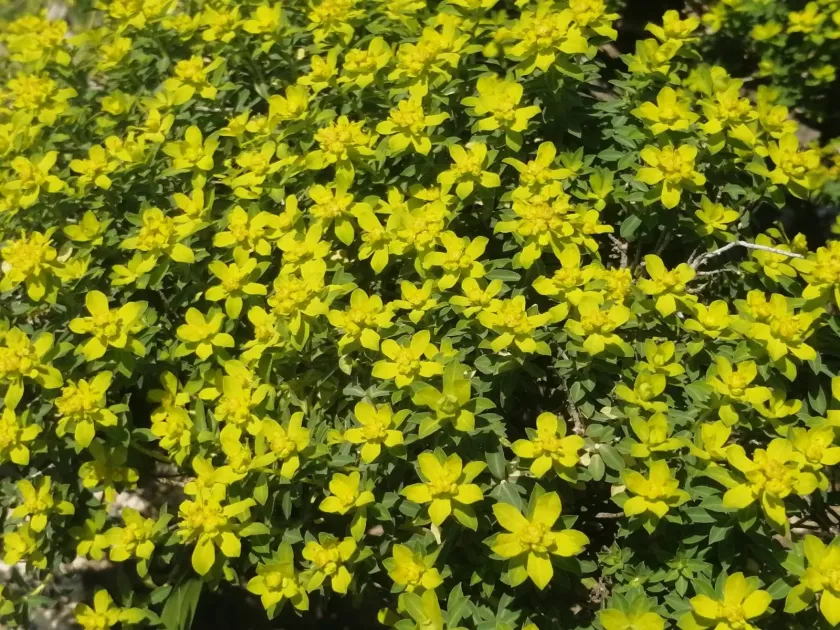
Botanically, it is defined by its latex-containing stems and narrow, lance-shaped leaves. Its most distinctive feature is the vibrant yellow floral display, composed of modified bracts (cyathia) that appear in the early spring, signaling the peak of its vegetative cycle.
The primary agronomic requirement is the avoidance of waterlogging. While it tolerates drought exceptionally well, its roots are sensitive to anaerobic conditions, necessitating soil with excellent permeability to prevent physiological disorders.
Main diseases and pests
The most common threat to Jerusalem spurge is root rot, triggered by poor drainage or excessive irrigation. This condition is often fatal, as the root system becomes highly susceptible to various fungal pathogens in stagnant water environments.
Despite the toxic nature of its milky sap, which naturally repels many herbivores, the plant is not entirely immune to pests. Aphid infestations may occur on tender spring shoots, which can stunt growth if left untreated during the critical vegetative phase.
Fungal leaf spot and rusts can occasionally emerge in conditions with poor airflow or high relative humidity. Maintaining adequate spacing between plants is an essential cultural practice to reduce the pressure from these foliage pathogens.
Mechanical damage to the stems can also lead to secondary infections. It is vital to perform any pruning or maintenance carefully to avoid unnecessary wounding, which provides entry points for various pathogenic microorganisms.
Management of these threats is mainly preventative. By choosing elevated or sloped planting sites and ensuring a correct irrigation schedule that mimics natural rainfall patterns, the risks of disease can be minimized significantly.