
Euphorbia griseola
Euphorbia griseola
Description
Growing requirements
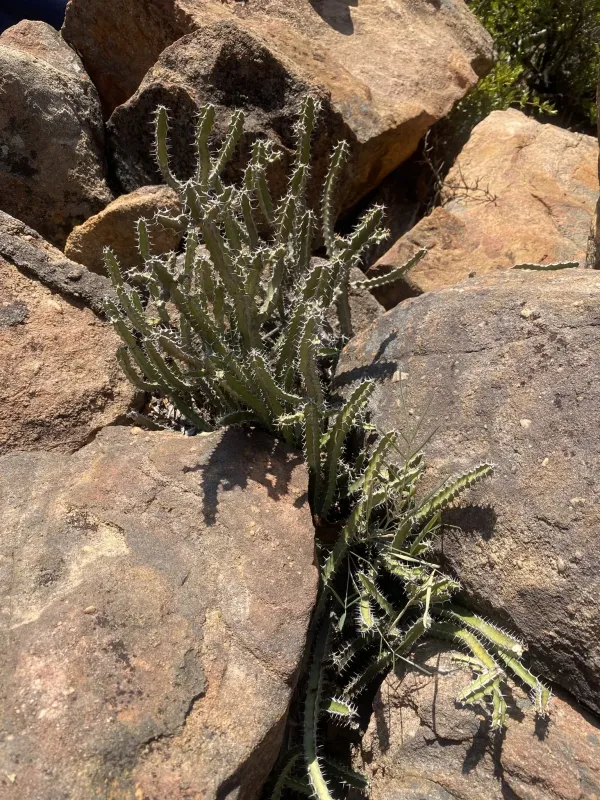
Euphorbia griseola is a perennial succulent species belonging to the Euphorbiaceae family. It is native to the arid and semi-arid regions of East and Southern Africa, where it has adapted to survive with minimal rainfall and high solar radiation.
The plant exhibits a shrub-like growth habit with thick, ribbed succulent stems that are covered in a glaucous, greyish bloom. This unique feature helps the plant to reflect sunlight and minimize water loss through transpiration, allowing it to thrive in harsh, desert-like environments.
To successfully cultivate this species, it is essential to provide full exposure to sunlight. The plant demands a well-draining, gritty soil mix that mimics its natural habitat, ensuring that water does not sit around the roots, which can lead to rapid decay.
Temperature management is critical, as Euphorbia griseola is highly sensitive to cold and freezing conditions. In climates where winter temperatures drop significantly, cultivation must take place in greenhouses or controlled environments to prevent cellular damage.
In terms of agricultural and horticultural use, this species is primarily valued for its ornamental appeal in xeriscaping projects. Its architectural form makes it a popular choice for collectors and designers working in climates where water scarcity limits traditional gardening options.
Main diseases and pests
The most significant threat to Euphorbia griseola is overwatering, which predisposes the plant to fungal infections. Root rot is a common issue that often presents as soft, discolored patches at the base of the stems, leading to systemic plant failure.
Insect pests such as mealybugs and spider mites are frequent threats. Mealybugs tend to congregate in the deep ribs of the stems, making them difficult to detect until an infestation is well-established, causing stunted growth and tissue damage.
Spider mites thrive in low-humidity environments, which are typically preferred for succulents. Their presence is indicated by fine webbing and a stippled appearance on the skin of the stems, requiring prompt intervention with acaricides or insecticidal soaps.
Proper sanitation is essential for disease management. Any pruning tools used on the plants must be sterilized with alcohol to prevent the transmission of pathogens between healthy and infected individuals, especially since the plant produces an irritating latex.
Finally, protection from mechanical injury is crucial. Wounds on the stem surface are potential entry points for bacteria and fungi; therefore, careful handling and the use of proper supportive structures are recommended to maintain plant integrity.