
Granulated spurge
Euphorbia granulata
Description
Growing requirements
Granulated spurge (Euphorbia granulata) is a perennial herbaceous plant belonging to the Euphorbiaceae family. It is a prostrate succulent known for its remarkable ability to thrive in extremely arid desert environments.
The native range of this species encompasses the dry regions of Northern Africa, the Arabian Peninsula, and Southern Asia. It is naturally adapted to sandy and gravelly soils that are often nutrient-poor.
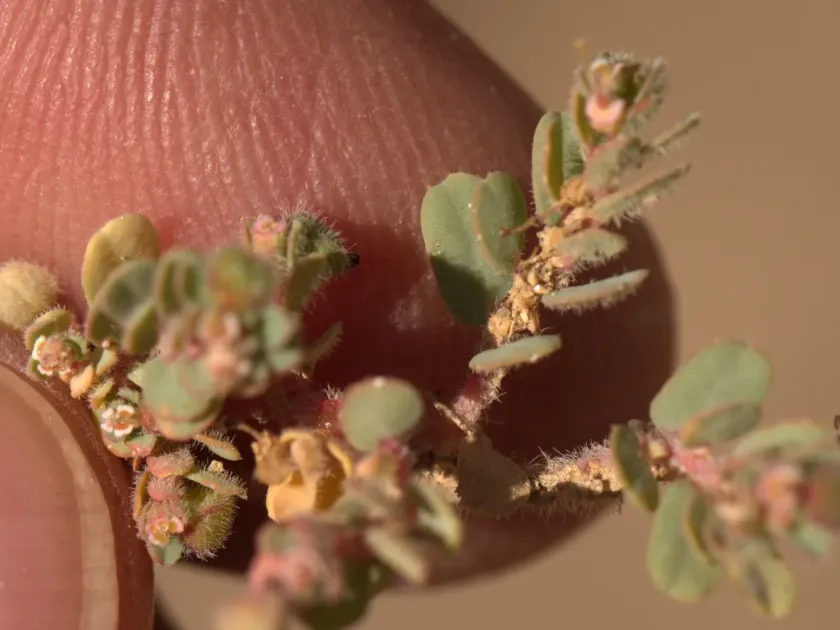
Botanically, the plant is characterized by its trailing stems, small opposite leaves, and the presence of a milky latex that acts as a natural deterrent against herbivores. The root system is deep, optimizing water uptake in volatile environments.
Agricultural requirements focus on high light intensity and perfect drainage. The species is highly sensitive to waterlogging, which can cause rapid tissue decay in the stem and root zones.
Beyond its ecological role, the plant is utilized in various folk medicine practices and serves as a potential candidate for soil stabilization in sandy areas prone to erosion.
Main diseases and pests
Root rot is the most significant pathological threat to Euphorbia granulata, usually triggered by excessive moisture or heavy, non-porous soil types that retain water.
Spider mites represent a major pest risk, particularly when ambient temperatures are high and humidity is consistently low, requiring careful monitoring of the foliage.
Fusarium wilt can devastate populations under sub-optimal conditions. Proper soil management and ensuring adequate air circulation are essential to mitigate this risk.
Aphid infestations on tender vegetative parts can stunt growth and introduce secondary infections, necessitating early intervention with mild systemic pesticides.
Biological control and strict adherence to irrigation schedules are the primary methods for maintaining plant health in both nurseries and field trials.