
Euphorbia grandialata
Euphorbia grandialata
Description
Growing requirements
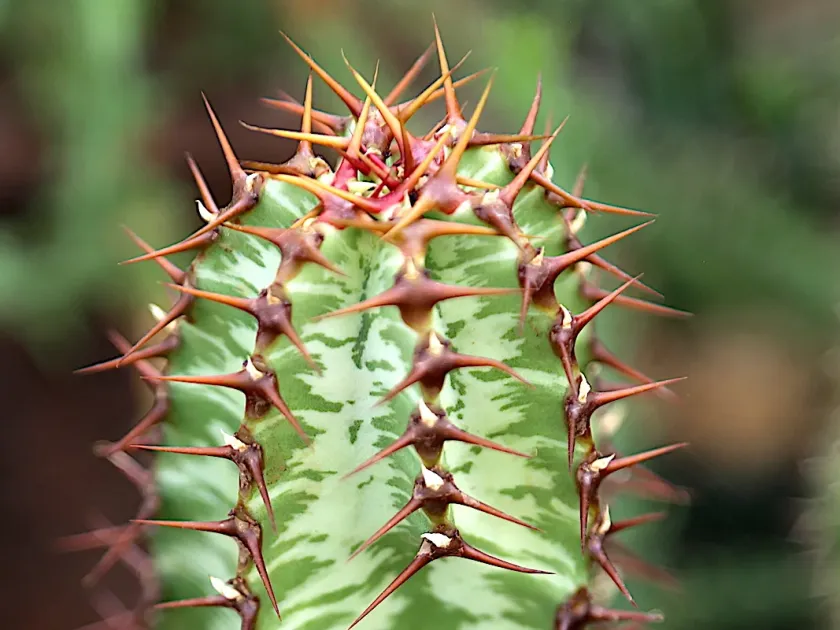
Euphorbia grandialata is a distinct species within the Euphorbiaceae family, recognized for its impressive, wing-like stem structures. Native to the arid regions of Southern Africa, this succulent has evolved to thrive in high-heat and low-rainfall environments.
The plant functions primarily through its succulent stems, as true leaves are essentially absent or vestigial. The wide, architectural wings along the stem are the primary photosynthetic organs, allowing the plant to store significant amounts of water during dry periods.
Climate requirements for this species are strict; it requires full sun exposure to maintain its compact and robust form. Without adequate light, the plant will etiolate, becoming thin and weak, which significantly reduces its aesthetic and biological viability.
Soil composition must prioritize drainage above all else. A porous substrate consisting of volcanic rock, coarse sand, and a small portion of mineral-rich topsoil is recommended to ensure that moisture does not linger around the delicate root system.
Temperature management is critical for the cultivation of this species. It is highly sensitive to frost and cold stress, thriving best when maintained in an environment between 20 and 30 degrees Celsius during the active growing season.
Main diseases and pests
The primary threat to the longevity of Euphorbia grandialata is improper watering, which leads to physiological root rot. Because the plant is adapted to drought, any soil saturation beyond its capacity can cause rapid fungal colonization of the stem base.
Pests commonly associated with this plant include mealybugs, which tend to congregate in the protected areas between the wing-like protrusions of the stem. Spider mites may also occur in environments with extremely dry, stagnant air.
The plant produces a potent, milky latex that acts as a natural chemical defense against most herbivores. While this protects the plant from many insects, it also poses a dermatological risk to handlers, as the sap is highly irritant to skin and eyes.
Bacterial soft rot can occur if the plant surface is wounded and subsequently exposed to excessive humidity. Maintaining excellent air circulation and avoiding overhead watering are the most effective preventive measures against such infections.
In cases of infestation, systemic insecticides are generally effective, but care must be taken to ensure the plant is not in a stressed state when treatments are applied. Preventive checks should focus on the stem junctures where pests often hide.