
Globe euphorbia
Euphorbia globosa
Description
Growing requirements
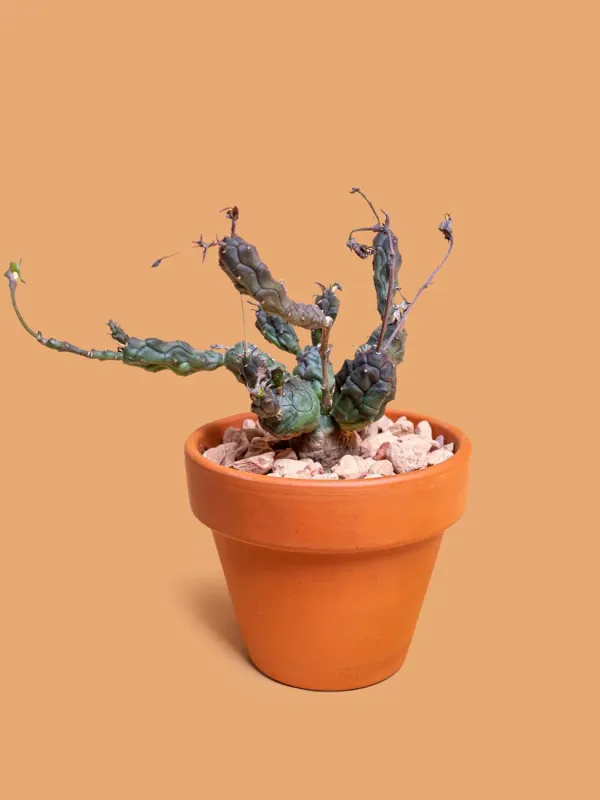
Euphorbia globosa, commonly known as the globe euphorbia, belongs to the Euphorbiaceae family. This distinct succulent is native to the Cape Province of South Africa, where it thrives in arid rocky environments.
The plant possesses a unique morphology characterized by spherical to cylindrical segments that form branching clusters. These segments are highly succulent, allowing the plant to store significant moisture for long periods of drought.
Cultivation requires bright, indirect to direct sunlight. Providing adequate light is essential to maintain the plant's compact, globe-like structure and to stimulate the potential for seasonal flowering.
Soil requirements involve a highly porous, gritty substrate. Using a mix consisting primarily of pumice, perlite, and coarse sand with minimal organic matter is the standard practice for successful growth.
Temperature management is vital, with a growing season requiring warm conditions and a winter rest period demanding cooler temperatures, typically between 10 and 12 degrees Celsius, to ensure dormancy.
Main diseases and pests
The primary threat to the globe euphorbia is fungal rot resulting from poor drainage or excessive watering. Once the succulent tissue begins to decay, the process is often irreversible if not detected early.
Mealybugs are the most common insect pests found on this plant. They prefer the sheltered areas between the spherical segments, making them difficult to spot and treat during the early stages of infestation.
Root aphids can also cause significant damage by feeding on the root system. Infested plants show signs of stunted growth and a general decline in vitality, requiring immediate repotting and specialized soil treatments.
Spider mites might infest the plant during periods of low humidity. These pests suck the sap from the plant, leaving behind small yellow spots and fine webbing on the surface of the segments.
Control measures should prioritize cultural practices, such as proper watering and ventilation, supplemented by the use of systemic insecticides or fungicides when necessary to protect the plant's health.