
Euphorbia fruticosa
Euphorbia fruticosa
Description
Growing requirements
Euphorbia fruticosa is a perennial succulent plant belonging to the Euphorbiaceae family. Originating from the arid regions of Africa and the Arabian Peninsula, this species is highly specialized for survival in harsh, water-stressed environments.
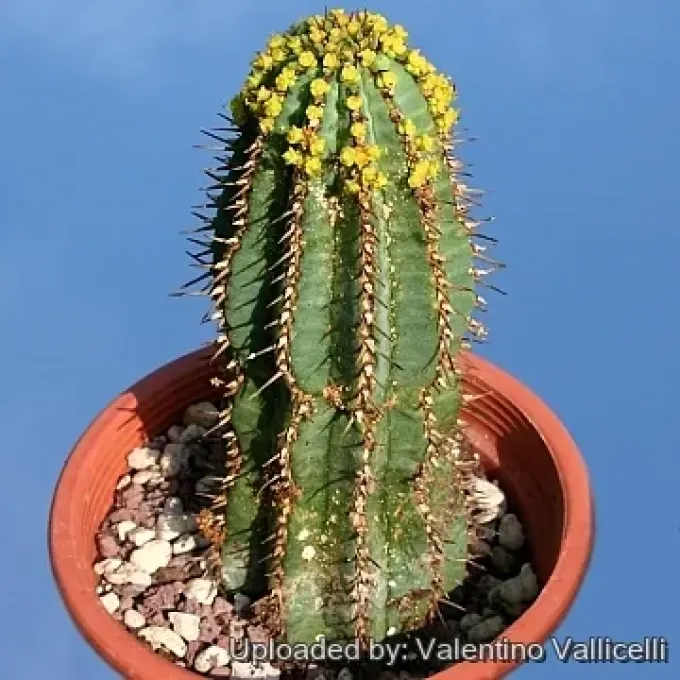
Botanically, it is characterized by a shrubby growth habit with fleshy, ribbed stems. These stems serve as critical water-storage organs, allowing the plant to remain hydrated during long periods of drought. Small spines along the ribs provide protection against herbivores.
Successful cultivation requires a substrate with excellent drainage, such as a mixture of coarse sand and gravel. The soil should be poor in nutrients, as excessive fertilization can promote soft, unhealthy growth that is susceptible to collapse.
The plant thrives in full sun and requires high light intensity to maintain its natural structure. Insufficient light results in etiolated, weak stems that lack the structural integrity and defensive compounds typical of healthy specimens grown in optimal conditions.
Thermal requirements are strict, as Euphorbia fruticosa is not frost-tolerant. It performs best in environments where temperatures remain warm year-round, necessitating greenhouse cultivation in temperate climates to protect the plant from cold and excessive winter humidity.
Main diseases and pests
The most significant threat to Euphorbia fruticosa is root rot, which typically occurs due to waterlogged soil or poor drainage. Once established, rot can spread rapidly through the succulent tissues, often making the plant irrecoverable.
Pest pressures primarily include mealybugs and spider mites. These pests thrive in warm, dry environments and can cause severe damage by feeding on the sap, which eventually leads to stunted growth and the potential for secondary fungal infections.
Management of pests involves the use of systemic insecticides, although care must be taken as succulents can be sensitive to certain chemical formulations. Regular inspection and the removal of infected plant parts are essential components of an effective pest management strategy.
Cultural control is critical, particularly maintaining good airflow around the plants. Proper ventilation helps prevent the buildup of humidity, which is a major factor in the development of fungal pathogens and surface molds on the stems.
In terms of agricultural and horticultural use, Euphorbia fruticosa is utilized primarily in xeriscaping and arid-zone landscaping. Its resilience makes it an ideal candidate for low-maintenance green spaces where water conservation is a top priority.