
Forsskål's spurge
Euphorbia forskaolii
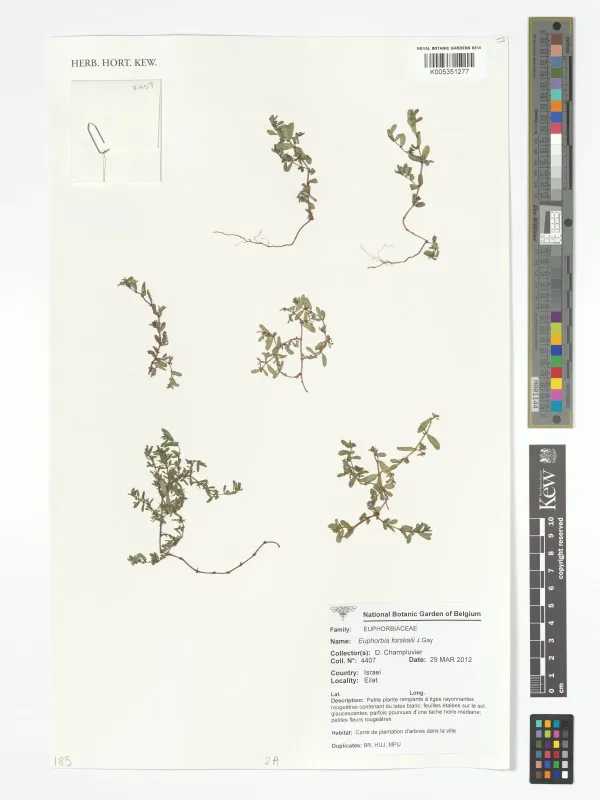
Description
Sowing dates
Forsskål's spurge (Euphorbia forskaolii) is an annual herbaceous plant belonging to the Euphorbiaceae family. It is typically found in arid and semi-arid environments across Africa and the Middle East.
Sowing occurs during the spring season when soil temperatures reach 15–18 degrees Celsius. Proper temperature levels are crucial for achieving high germination rates of the seeds.
The seeds should be sown at a shallow depth to ensure they receive sufficient light, which is essential for initiating the germination process in this specific species.
Maintaining appropriate row spacing is vital for the development of individual plants, as they compete for limited resources if planted too densely in the field.
Using high-quality, viable seeds significantly enhances the uniformity of the stand, making subsequent agricultural operations much easier to manage.
Growing requirements
This crop is highly resilient and thrives in poor soil conditions, including sandy and slightly saline substrates, making it suitable for areas with marginal land quality.
Forsskål's spurge requires full sun exposure to reach its maximum growth potential. Shaded environments negatively impact its biomass production and secondary metabolism.
Water requirements are relatively low, as the plant is adapted to drought conditions. Excessive soil moisture, however, poses a significant risk to the plant's health.
The ideal soil pH for this species is generally neutral or slightly alkaline. Good drainage is essential to prevent root rot, which is the most common cause of crop failure.
Consistent temperatures are preferred, though the plant is capable of surviving temporary fluctuations that occur in arid climate zones during the growing season.
Yield
The total yield of Forsskål's spurge is largely dependent on the availability of solar energy and the management of soil nutrients during the early vegetative stage.
Proper agricultural practices, including systematic weed control and spacing, allow farmers to reach the potential biomass yield expected from this species.
Productivity can be significantly increased by employing irrigation methods in very dry climates, although water should be applied cautiously to avoid saturation.
Harvesting is timed based on the flowering stage, ensuring the plant mass is collected when it contains the highest concentration of desired chemical compounds.
Handling the harvested biomass requires protective gear because the plant contains a caustic milky sap that can be irritating to human skin and eyes.
Main diseases and pests
The milky sap produced by the plant acts as a strong natural deterrent against many common herbivores and insect pests, reducing the need for chemical pesticides.
Despite these natural defenses, the crop can be susceptible to fungal diseases if atmospheric humidity levels remain high for extended periods, causing stem or leaf lesions.
Root system issues, such as decay or fungal infections, often occur when the crop is subjected to waterlogged soil conditions for too long.
- Monitoring for fungal pathogens during periods of high humidity.
- Removing infested plants promptly to prevent the spread of soil-borne diseases.
- Implementing proper soil aeration techniques before the growing season.
Effective crop management should prioritize the prevention of moisture accumulation around the base of the plant to keep the root zone healthy.
Harvesting
Harvesting is typically conducted during the peak flowering phase to ensure the quality of the harvested biological material is at its maximum level.
The cut plant material must be dried in well-ventilated areas or specialized drying facilities, protecting it from direct UV light to preserve its natural properties.
Once dried, the biomass is usually processed or milled to the required specifications for commercial use, storage, or further industrial transformation.
Storage should be handled in dry, cool, and dark conditions to prevent the degradation of the plant material during long-term holding periods.
Safety protocols must be strictly followed by personnel during harvest to avoid contact with the sap, which can cause severe skin irritation.