
Euphorbia flanaganii
Euphorbia flanaganii
Description
Growing requirements
Euphorbia flanaganii is a unique succulent belonging to the Euphorbiaceae family. It is native to the arid regions of the Eastern Cape in South Africa, where it has adapted to harsh environmental conditions.
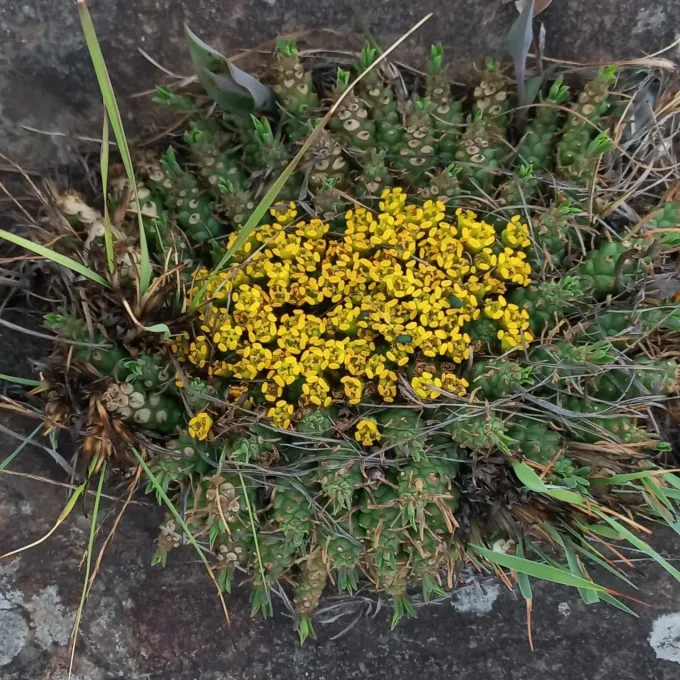
Botanically, it is classified as a caudex-forming plant. The central swollen stem serves as a vital water storage organ, from which slender, snaking branches extend, giving the plant its distinctive appearance.
Cultivation requires a highly porous, well-draining soil mix, typically consisting of pumice, coarse sand, and perlite. Heavy organic substrates are detrimental to the root health of this species.
The plant thrives in bright, indirect light or full morning sun. High light intensity is crucial to maintain the compact, radial growth habit and prevent the branches from becoming leggy or etiolated.
The watering schedule should be strictly regulated: water deeply during the growing season only when the soil has completely dried out, and keep the plant almost dry during the winter dormancy period.
Main diseases and pests
The primary threat to the plant is fungal root rot triggered by excessive moisture and poor drainage. Ensuring the crown of the caudex remains dry is essential to prevent tissue collapse.
Mealybugs are the most common pest, often colonizing the crevices between the branches. Regular inspection and targeted application of horticultural oils or systemic insecticides are recommended.
Spider mites can become an issue during periods of extreme heat and low humidity. Maintaining slight air circulation around the plant helps reduce the risk of such infestations.
Like many species in the genus, Euphorbia flanaganii contains a toxic, milky latex sap. Protective equipment is strictly necessary when pruning, as the sap is a potent irritant to skin and eyes.
Pest management should also include cleaning the surrounding area and ensuring the pot surface is free of debris, which minimizes the nesting sites for crawling insects.