
Sickle-leaved spurge
Euphorbia falcata
Description
Growing requirements
The sickle-leaved spurge (Euphorbia falcata) is an annual herbaceous plant belonging to the Euphorbiaceae family. In agricultural contexts, it is commonly classified as a segetal weed invading cultivated fields.
It is native to the Mediterranean region, Central and Southern Europe, and parts of Western Asia. The plant prefers warm, sunny climates and is frequently found in disturbed soil, field margins, and croplands.
This species thrives in a variety of soil types, including sandy and calcareous soils. It is particularly well-adapted to environments with moderate to low moisture levels due to its efficient root system.
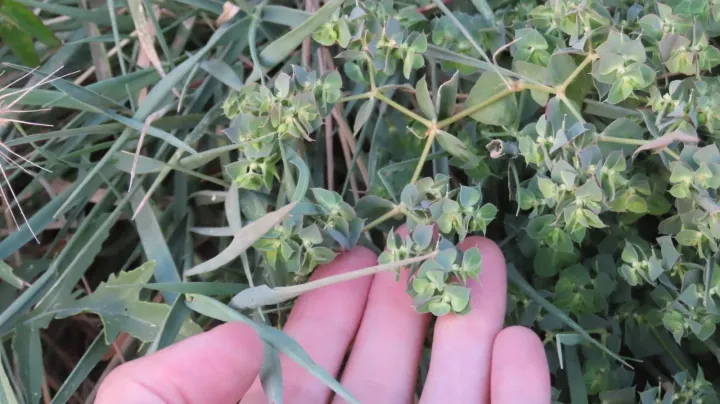
Botanically, Euphorbia falcata is identified by its sickle-shaped (falcate) leaves and its characteristic milky latex present in all parts of the plant. The stems are typically erect and branched, growing up to 30 centimeters in height.
Reproduction is exclusively by seed. The plant produces small, inconspicuous flowers throughout the summer, resulting in high seed production that ensures long-term survival in the seed bank.
Main diseases and pests
The primary agricultural threat posed by the sickle-leaved spurge is its competitive nature. By rapidly occupying space and utilizing available water and mineral resources, it directly reduces the vigor of the desired crop.
The presence of toxic milky latex makes the plant unpalatable and potentially harmful to livestock. Contamination of grain or fodder crops with this plant is considered a quality issue in agricultural production.
Effective management strategies include mechanical cultivation before the flowering stage to prevent seed dispersal. Deep plowing is also effective in burying seeds beyond their germination depth.
Chemical control using systemic herbicides is recommended for larger infestations. Application timing is crucial, with the most effective results obtained during the early vegetative growth phase.
Natural enemies, such as rust fungi (Uromyces species), can infect the plant, but these seldom provide enough suppression to remove the need for standard weed management protocols in high-yield farming environments.