
Euphorbia erythradenia
Euphorbia erythradenia
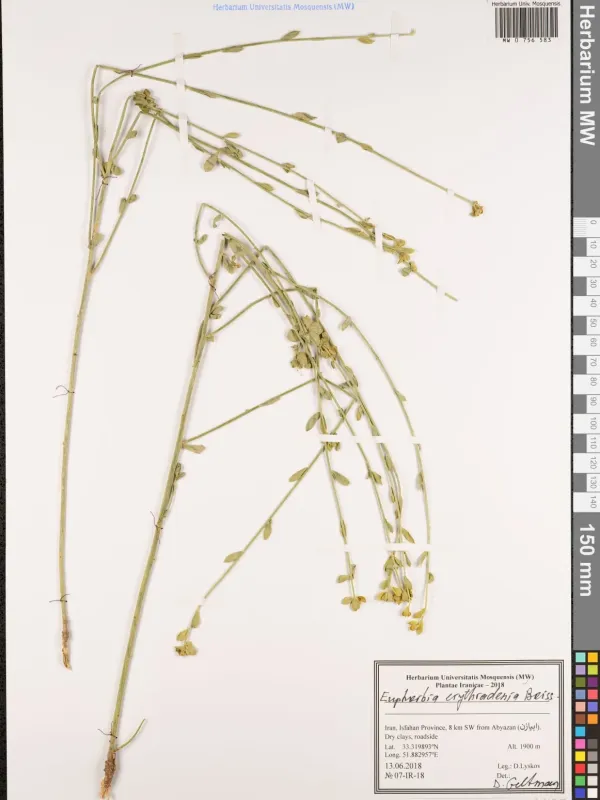
Description
Sowing dates
Euphorbia erythradenia is a perennial herbaceous plant belonging to the Euphorbiaceae family, native to the mountainous regions of the Caucasus. Cultivation typically begins with sowing seeds in late autumn to ensure they undergo natural stratification during the winter months.
If spring sowing is preferred, seeds must be artificially stratified for 4–6 weeks at temperatures between 2°C and 5°C. The seeds should be planted at a shallow depth of 1–2 cm in a well-draining soil mix, with spacing maintained to prevent overcrowding as the plants mature.
Growing requirements
This species is a typical xerophyte, requiring full exposure to sunlight for healthy development and proper form. It is essential to plant Euphorbia erythradenia in locations that receive direct sunlight throughout the day to avoid etiolation of the stems.
The soil requirements are strict: the medium must be lean, sandy, or rocky with excellent drainage properties. The plant does not tolerate heavy or waterlogged clay soils, which can lead to rapid decay of the taproot system.
Regarding fertilization, minimal input is required. Excessive nutrients lead to weak growth and increased susceptibility to pests. Providing a balanced, low-concentration fertilizer once in early spring is usually sufficient to support the plant throughout the growing season.
Main diseases and pests
The main threats to the plant's health are fungal diseases resulting from excessive moisture, specifically root and crown rot. Preventing water accumulation around the base of the plant is the most effective management strategy to maintain long-term vitality.
Insect pests, including aphids and spider mites, can occur during periods of high heat and drought. Regular inspection of the foliage is recommended to catch infestations early, followed by the application of horticultural oils or targeted insecticides if necessary.
Harvesting
Harvesting for medicinal or scientific purposes should be timed with the peak flowering period when phytochemical concentrations are at their zenith. Stems should be cut carefully, leaving enough of the plant base for potential regrowth in subsequent seasons.
Caution is paramount during harvest due to the plant's milky latex. This substance is known to be irritating to the skin and toxic if ingested. Always wear gloves, long sleeves, and eye protection to prevent contact with the sap during handling or processing.