
Euphorbia eriantha
Euphorbia eriantha
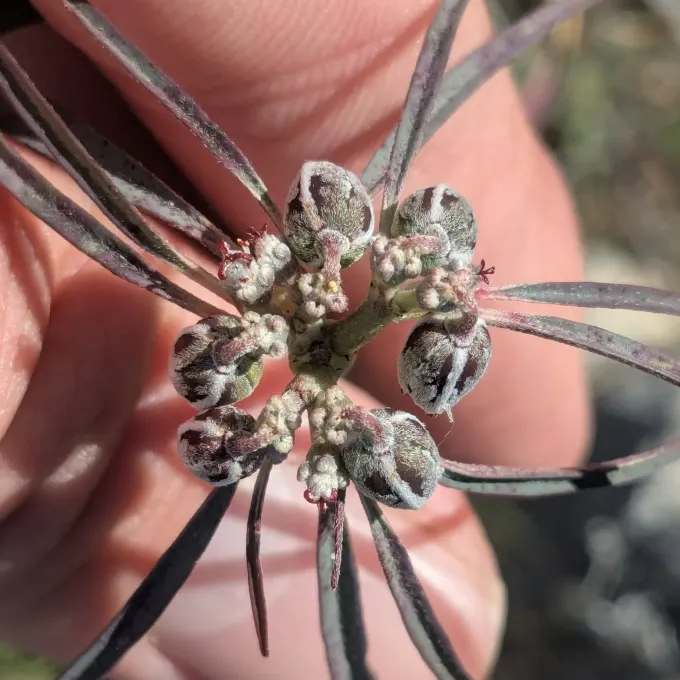
Description
Sowing dates
Euphorbia eriantha is a member of the Euphorbiaceae family. This annual plant species is specifically adapted to arid and semi-arid environments, making it a unique subject for agricultural study.
The optimal sowing window typically opens in early spring when soil temperatures reach a consistent 10–12 degrees Celsius, facilitating early establishment before the onset of summer heat.
Sowing depth should be calibrated to 2–3 cm, ensuring that the seeds have access to sufficient soil moisture for germination while avoiding excessive depth that could hamper sprout emergence.
Planting density is crucial for this crop, with recommended stands between 150,000 and 200,000 plants per hectare, allowing for proper airflow and competition control.
Post-sowing rolling of the soil surface is highly recommended to improve the capillary movement of water, which is essential for uniform emergence in dry climatic conditions.
Growing requirements
This crop thrives in well-drained, sandy, or light loam soils. Soil aeration is critical, as the roots are sensitive to hypoxia caused by stagnant water or compacted ground.
Euphorbia eriantha demonstrates exceptional drought tolerance. It is well-suited for regions where water scarcity limits the cultivation of traditional, water-intensive agricultural crops.
High solar intensity is required for optimal development. The plant is photophilic and should be cultivated in open areas free from tree shade or structure interference.
Nutrient management focuses on phosphorus and potassium to boost root vigor. Nitrogen applications should be moderate to avoid excessive vegetative growth at the expense of yield.
Crop rotation is fundamental to soil health and disease prevention, especially to break cycles of soil-borne pathogens that target plants within the Euphorbiaceae family.
Main diseases and pests
Root rots are the most significant threat, often induced by waterlogging or poor drainage. Ensuring optimal soil conditions is the primary method of preventing these infections.
Pests such as cutworms and aphids can be problematic during the seedling stage. Monitoring and early intervention are essential to protect the crop during its most vulnerable phase.
The plant's internal milky latex provides natural protection against generalist herbivores, yet specialized insect populations can still pose a risk to dense monocultures.
Weed management is paramount, particularly within the first four weeks after germination. Mechanical inter-row cultivation is the most effective control method.
Integrated Pest Management (IPM) strategies, including biological controls and targeted chemical application only when thresholds are exceeded, are recommended for long-term sustainability.