
Euphorbia ellenbeckii
Euphorbia ellenbeckii
Description
Growing requirements
Euphorbia ellenbeckii is a fascinating succulent species belonging to the Euphorbiaceae family. It is native to the arid regions of East Africa, including Ethiopia and Somalia, where it thrives in harsh, dry climates.
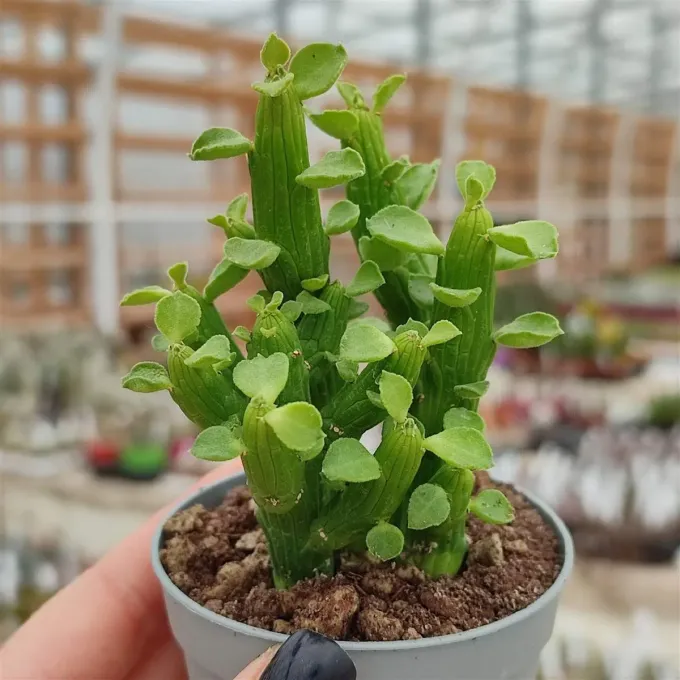
Botanically, it is classified as a shrubby succulent featuring thin, cylindrical, and leafless stems. This morphology is a clear evolutionary adaptation to reduce water loss through transpiration in intense desert sunlight.
Cultivation requires conditions that mimic its natural habitat. It needs high light levels throughout the year to maintain its structure and coloration, making it ideal for greenhouses or bright windowsills.
The substrate must be highly porous and inorganic. A mixture of pumice, grit, and sandy soil is recommended to ensure that moisture is never retained around the root system for extended periods.
Regarding climate, it prefers warm temperatures and is extremely sensitive to frost. Providing a dry, cool winter dormancy period is essential to simulate the seasonal shifts of its native environment and encourage healthy growth.
Main diseases and pests
The primary threats to Euphorbia ellenbeckii are fungal pathogens, specifically stem rot and root rot, which are almost always caused by overwatering or poor drainage systems in the potting medium.
Pests such as mealybugs and spider mites are common concerns for indoor cultivation. These pests tend to congregate in the crevices of the succulent stems, making them difficult to spot in the early stages.
Integrated pest management, including regular inspection and the use of targeted miticides or insecticidal soaps, is necessary to maintain the health of the collection.
Maintaining air circulation is a critical preventive measure against both fungal growth and pest infestations. Stagnant air in enclosed spaces often leads to weak growth and increased susceptibility.
Any damage to the stems should be monitored closely, as the plant's milky latex can attract opportunistic bacteria. Keeping the environment clean and using sterile tools for any necessary pruning is vital.