
Euphorbia ebracteolata
Euphorbia ebracteolata
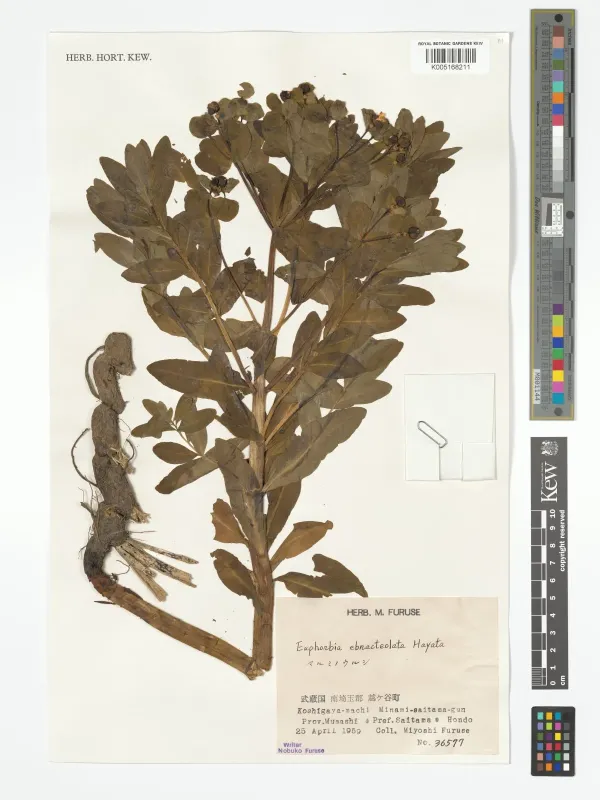
Description
Growing requirements
Euphorbia ebracteolata is a perennial herbaceous plant belonging to the Euphorbiaceae family. This species is recognized for its unique physiological traits and the production of a milky latex that contains various biologically active secondary metabolites.
Native to East Asia, including parts of China and Korea, this plant thrives in diverse environments ranging from forest margins to open hilly slopes. It prefers well-drained, fertile soil and requires sufficient sunlight to maintain healthy vegetative growth.
The plant exhibits significant hardiness, adapting well to the temperate climate conditions of its natural range. Morphologically, it is characterized by its erect stems, linear leaves, and specific inflorescences that lack the prominent bracts typically associated with the genus.
Agronomically, this plant is not a large-scale commodity crop but serves as a subject of interest for phytochemical research. The cultivation process requires careful attention to soil moisture management to prevent root rot, as the species is sensitive to waterlogged conditions.
The botanical structure of the plant is highly specialized, and its reproduction involves both seed dispersal and vegetative spreading via the root system. Understanding these growth patterns is essential for any potential development of controlled cultivation protocols.
Main diseases and pests
The primary pathological concerns for Euphorbia ebracteolata include fungal diseases such as powdery mildew and various leaf spot pathogens that can develop under conditions of poor airflow and high humidity.
Pest management is focused on controlling sap-sucking insects such as aphids and spider mites, which can drain the plant's resources and potentially serve as vectors for phytoviral diseases. Implementing integrated pest management strategies is crucial for sustaining healthy plant populations.