
Euphorbia desmondii
Euphorbia desmondii
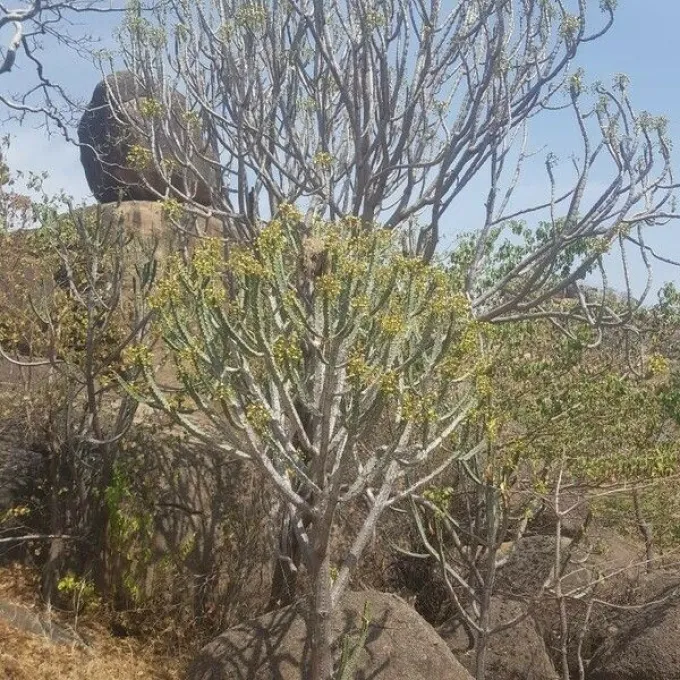
Description
Sowing dates
Euphorbia desmondii is a perennial succulent shrub that propagates primarily through seeds or vegetative cuttings during the spring and summer growth cycles.
When cultivating in professional settings, seeds are sown in a well-draining, lightweight substrate with temperatures maintained between 22 and 25 degrees Celsius.
Cuttings are generally considered the preferred propagation method as they ensure the stability of the plant's characteristics and promote a faster establishment phase.
It is critical to allow cuttings to dry for several days before planting to ensure that the milky sap at the cut site has fully calloused, preventing root rot.
All propagation procedures must be performed using protective gear due to the toxic nature of the plant's latex, which can cause severe skin irritation.
Growing requirements
Native to arid African regions, this crop requires high levels of solar exposure throughout the day to thrive and maintain its structural integrity.
The ideal soil profile is sandy or rocky, providing excellent aeration and permeability; organic-rich soils should be avoided to prevent water retention.
The plant is highly susceptible to waterlogged conditions, making precise irrigation management essential for long-term health and survival.
Temperatures must remain above 10 degrees Celsius consistently, as the species is sensitive to cold and does not tolerate freezing conditions.
During winter months, the plant enters a dormant phase where irrigation should be strictly limited to prevent the substrate from staying damp for too long.
Yield
Productivity in Euphorbia desmondii is evaluated based on the biomass yield and the concentration of chemical compounds derived from its succulent tissues.
Industrial greenhouse cultivation requires specific spacing to ensure proper airflow and light distribution, which are critical factors for maximizing vegetative growth.
The biological growth rate allows for consistent biomass production if environmental parameters such as light intensity and nutrient supply are balanced.
Yield metrics improve with the age of the specimen, as more mature plants develop thicker stems capable of storing higher volumes of valuable sap.
Consistency in greenhouse climate control, avoiding fluctuations in humidity and temperature, is the primary driver of stable annual yields.
Main diseases and pests
Fungal diseases are the most significant threat to this crop, particularly when poor ventilation or excessive soil moisture creates an environment for pathogen growth.
Common pests include mealybugs and spider mites, which thrive in low-humidity environments and can quickly infest large succulent plantations.
Bacterial soft rot can occur if the stems are damaged during handling, spreading rapidly through the vascular system of the plant.
Integrated pest management, including the use of systemic insecticides and strict hygiene practices, is required to maintain a healthy stock.
- Regular inspection for white cottony residues of pests.
- Sanitization of all cutting tools before and after use.
- Immediate removal and isolation of any symptomatic plants.
Harvesting
Harvesting of the plant material or propagation cuttings is best conducted during the peak growth season when the concentration of internal fluids is highest.
Sharp, sterile implements are necessary for harvesting to reduce the risk of secondary infections and ensure clean, rapid healing of the plant's wounds.
Processed material requires immediate handling or storage, as exposure to air causes the latex sap to oxidize and change its chemical efficacy rapidly.
Harvesters must wear appropriate personal protective equipment to avoid direct contact with the toxic sap, which can be hazardous to the eyes and skin.
Storage of the harvested crop must occur in a dark, cool, and dry environment to preserve the stability of the active components found in the plant.