
Euphorbia decidua
Euphorbia decidua
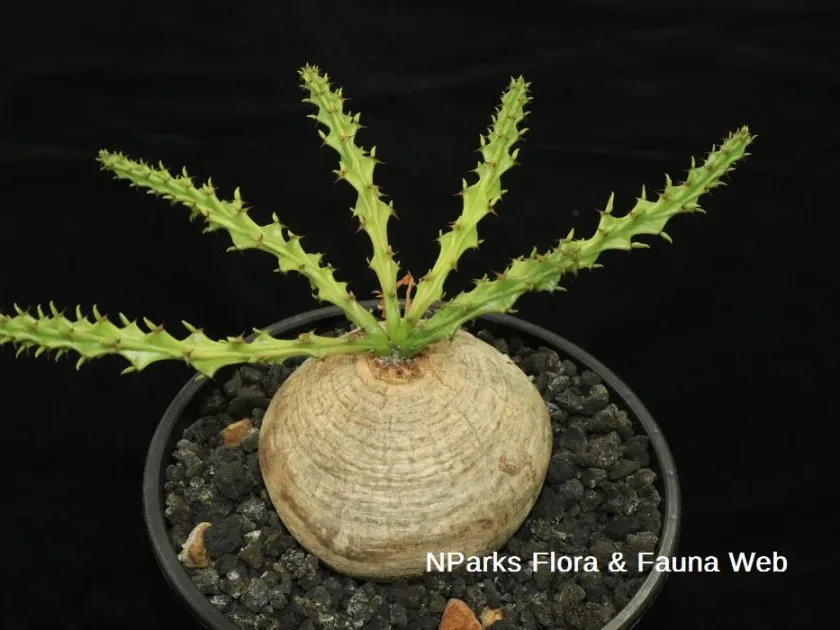
Description
Growing requirements
Euphorbia decidua is a fascinating species of caudex succulent belonging to the Euphorbiaceae family. Native to the tropical regions of Africa, specifically the Democratic Republic of the Congo, it has evolved to thrive in seasonal dry environments.
The plant is distinguished by its unique caudex, a swollen stem base that acts as a water storage organ. As the name suggests, it is deciduous, meaning it sheds its leaves during the dry season to conserve energy, entering a dormancy phase.
When cultivating this species, soil composition is critical. A highly porous and well-draining mineral-based substrate is essential. Use a mix of pumice, coarse sand, and a minimal amount of organic potting soil to mimic its natural habitat conditions.
Bright, indirect light is necessary for healthy growth. Intense direct sunlight can scorch the delicate skin of the caudex, so providing filtered light or morning sun is recommended to encourage proper development and aesthetic form.
Watering requirements follow a strict seasonal cycle. During the growing season, water only when the substrate has completely dried out. In winter, during its natural dormancy, keep the plant almost entirely dry to prevent rotting.
Main diseases and pests
The most significant threat to Euphorbia decidua is root and caudex rot caused by overwatering or poor drainage. Once decay begins in the woody base, it is often difficult to save the plant, making prevention the best strategy.
Pests such as mealybugs and spider mites are common in indoor collections. These pests thrive in dry air and can quickly infest the growth points of the succulent, draining the plant of essential nutrients and causing growth stuntedness.
Effective management involves regular inspection of the stems and the use of systemic insecticides or neem oil when an infestation is detected. It is crucial to quarantine new plants to prevent the spread of these pests.
Fungal infections can also occur if the humidity levels are too high or if the plant remains damp for prolonged periods. Maintaining good air circulation is a simple but effective cultural practice to reduce this risk significantly.
Always handle the plant with care, as its milky latex is toxic and can cause skin irritation or allergic reactions. Use protective gear when pruning or cleaning the plant to ensure safety for the grower.