
Euphorbia decepta
Euphorbia decepta
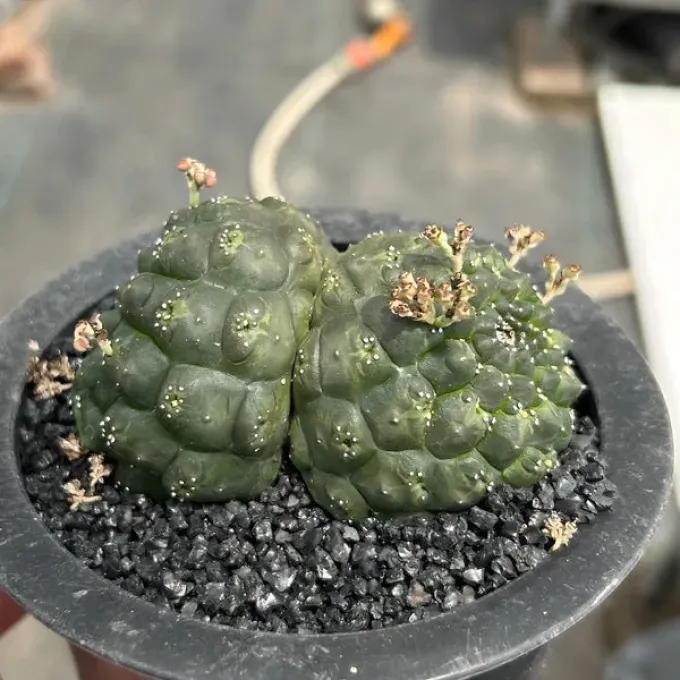
Description
Growing requirements
Euphorbia decepta is a distinct dwarf succulent native to the arid landscapes of the Cape Province in South Africa. As a member of the Euphorbiaceae family, it showcases remarkable evolutionary adaptations to extreme drought.
Botanically, the plant is characterized by a prominent underground caudex, which stores water and nutrients, allowing the plant to survive prolonged dry spells. The above-ground portion consists of short, compact stems.
Cultivation requires highly porous, well-draining soil mixtures. A typical substrate should consist of coarse sand, perlite, and a small fraction of organic material to prevent compaction and moisture retention.
Environmental requirements include bright, filtered sunlight. Exposure to intense light is essential for maintaining the compact growth habit and natural coloration, though protection from afternoon scorching is recommended.
The plant is primarily utilized in horticultural collections rather than mass agriculture. Its unique morphology and rarity make it a prized specimen for succulent enthusiasts and botanical garden research programs.
Main diseases and pests
The primary threat to Euphorbia decepta is root rot caused by improper watering techniques. Excess moisture in the soil prevents necessary aeration and provides an environment for destructive fungi.
Root mealybugs pose a significant risk, as they often colonize the underground caudex and roots. Their presence is usually detected only when the plant begins to show signs of stunted growth or decline.
Implementing a strict dry-winter regime is the most effective preventative measure against rot. During the dormant period, the plant requires almost no water to maintain its internal biological balance.
Pest management should focus on the use of systemic insecticides that can reach pests residing in the root zone. Regular inspection during repotting is essential for early detection.
Providing adequate ventilation is crucial to preventing mildew and bacterial infections. Stagnant air combined with humidity creates a high-risk environment for this sensitive desert species.