
Euphorbia debilispina
Euphorbia debilispina
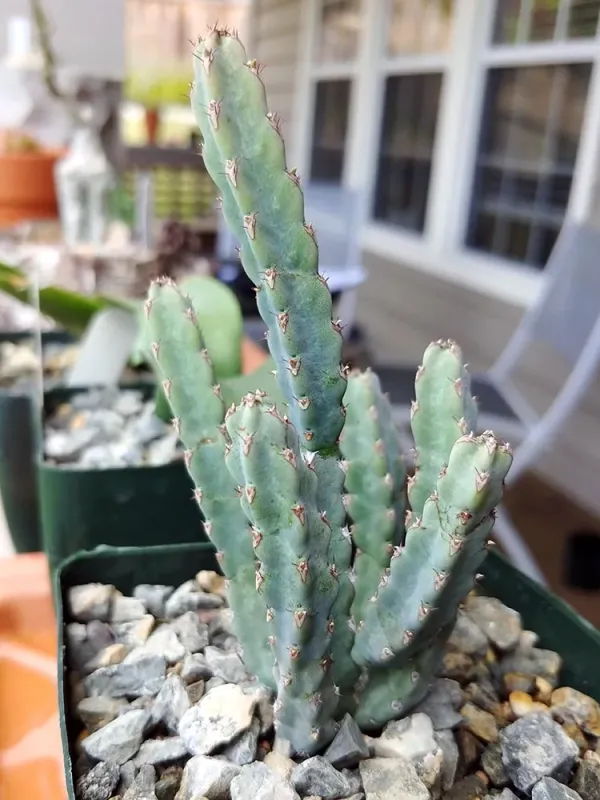
Description
Growing requirements
Euphorbia debilispina is a distinct succulent species within the Euphorbiaceae family, native to the arid environments of Southern Africa. This plant is prized by collectors for its slender, spine-covered stems that exhibit a unique, minimalist aesthetic compared to other more common succulent species.
Successful cultivation of this species requires a high-light environment. Providing several hours of direct, unfiltered sunlight is necessary to maintain the plant's structural integrity and prevent the etiolation that occurs in shaded conditions.
The choice of growing medium is a critical factor in the plant's health. A highly porous, mineral-based soil mix—consisting of coarse sand, pumice, or expanded clay—is essential to facilitate rapid drainage and ensure the roots have access to necessary oxygen.
Watering requirements follow the cycle of the growing season; in spring and summer, the plant should be watered only when the potting mix is thoroughly dry. During the dormant winter phase, watering should be significantly reduced or suspended to prevent root decay.
The optimal temperature range for Euphorbia debilispina is between 20°C and 30°C. Maintaining a consistent environment without drastic fluctuations helps to promote steady growth and ensures the plant remains vigorous throughout the active season.
Main diseases and pests
Root rot is the most significant threat to Euphorbia debilispina, primarily caused by overwatering or soil mixes that hold moisture for too long. If the stems lose their firmness or discolor at the base, it is usually a sign of advanced rot.
Mealybugs represent the most common pest challenge for this species. These insects tend to congregate in the tight spaces between spines, making them difficult to detect and eradicate without thorough and regular monitoring of the plant's surface.
Spider mites can also cause significant damage during periods of low humidity and high temperature. They feed on the succulent tissue, leaving behind visible damage and increasing the plant's susceptibility to secondary bacterial or fungal infections.
Fungal infections can develop if water accumulates on the stem surface or if the plant is kept in an environment with poor air circulation. Proper ventilation is key to preventing the growth of pathogens that cause black spots and tissue necrosis.
To protect the collection, it is advisable to keep newly acquired plants in quarantine for a short period. This practice helps ensure that any latent pests or diseases are identified before they can spread to healthy specimens.