
David's spurge
Euphorbia davidii
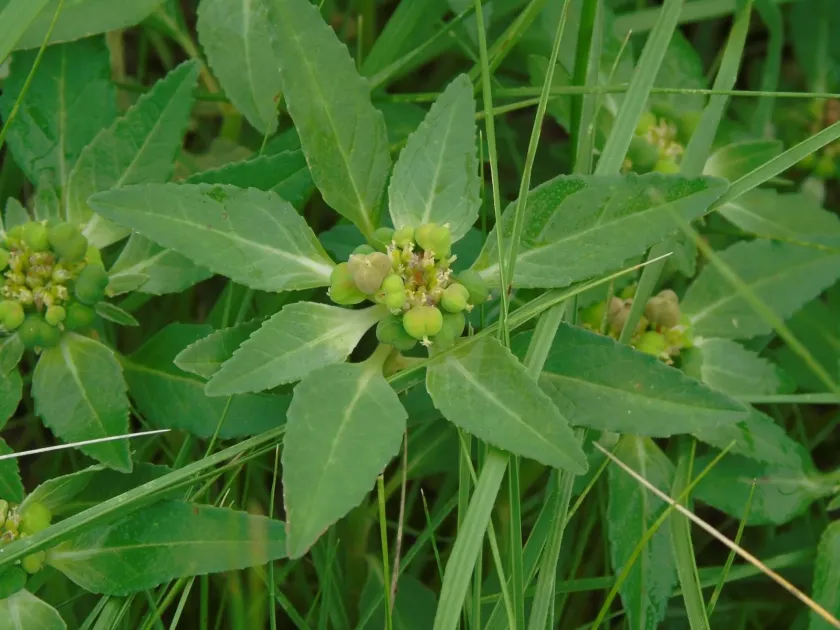
Description
Growing requirements
David's spurge (Euphorbia davidii) is an annual herbaceous plant belonging to the Euphorbiaceae family. In agricultural settings, it is recognized as a significant weed species that poses a threat to crop productivity due to its rapid growth and invasive potential.
The plant is native to North America, where it typically inhabits open, disturbed areas. Over the last century, it has spread significantly, adapting to diverse climatic conditions in various agricultural regions, often appearing as a contaminant in commercial seed lots.
Botanically, David's spurge is characterized by its erect, branching stems and lanceolate leaves. A defining feature of the genus, including this species, is the production of a milky latex sap, which contains various diterpene esters that are toxic and irritating to mammals.
The species thrives in full sun and well-drained soils, showing a particular preference for the disturbed nitrogen-rich environments found in modern crop fields. It competes aggressively for resources, often significantly reducing the available sunlight and soil moisture for primary crops.
Agricultural use for this species is non-existent as it is considered a pest. Its presence in pastures or hay is problematic, as the toxic components can cause digestive distress or skin lesions in livestock, necessitating strict eradication measures.
Main diseases and pests
The primary threat posed by David's spurge is its role as a persistent weed that reduces yields in maize, soybeans, and other row crops through direct competition and shading.
The plant can harbor various pathogens and insect pests, acting as a reservoir throughout the growing season, which increases the risk of crop infection.
Management is complicated by the seed dormancy and high reproductive capacity, as a single plant can produce thousands of seeds that remain viable in the soil for extended periods.
Common control strategies focus on integrated pest management (IPM), including early detection and the use of selective herbicides to prevent seed set.
Mechanical cultivation remains a viable option only in early growth stages before the development of deep, complex root systems that stabilize the plant.