
Euphorbia cylindrifolia
Euphorbia cylindrifolia
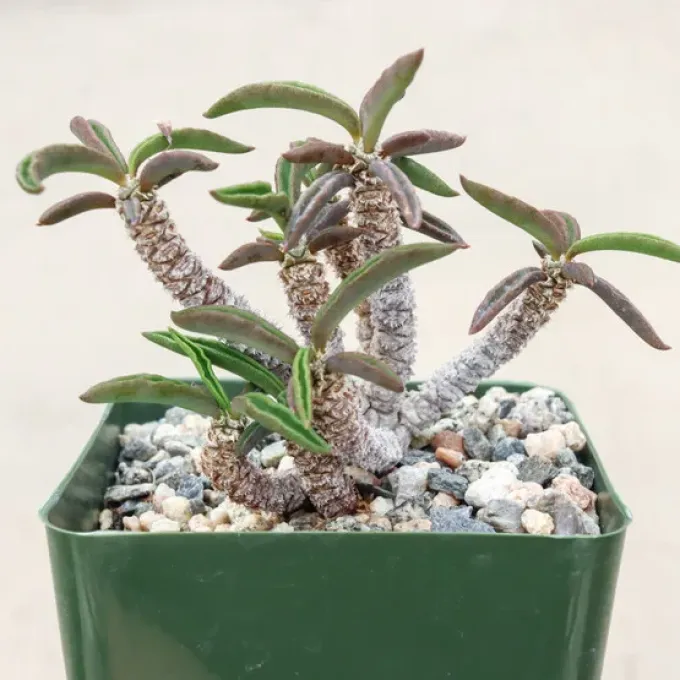
Description
Growing requirements
Euphorbia cylindrifolia is a distinct succulent species native to Madagascar, belonging to the diverse Euphorbiaceae family. It is highly valued for its unique, cylinder-like leaf structure and miniature growth habit.
The plant requires high light intensity to maintain its characteristic compact shape. In cultivation, it thrives in well-ventilated environments where temperatures remain stable, avoiding sudden drops or extreme heat spikes.
Soil requirements are strictly focused on drainage. A substrate composed of pumice, coarse sand, and a minimal fraction of organic peat is essential to prevent moisture accumulation near the delicate root system.
Watering protocols must follow a seasonal cycle. During the growing season, hydration should be provided sparingly only when the substrate is completely dry. In winter, the plant enters a dormant phase requiring nearly total irrigation withdrawal.
Cultural practices involve minimal fertilization, using low-nitrogen formulations designed specifically for cacti and succulents. Excessive feeding leads to succulent tissue softening, which increases the susceptibility of the plant to environmental stress.
Main diseases and pests
The primary threats to Euphorbia cylindrifolia include fungal pathogens, such as Pythium or Phytophthora, which proliferate under conditions of poor drainage and prolonged substrate humidity.
Mealybugs are the most persistent insect pests, often colonizing the crevices of the plant where leaves attach to the stems. Their feeding activity creates entry points for secondary infections.
Root aphids pose a hidden danger, as they often go unnoticed until the plant shows visible signs of yellowing or stagnation, necessitating complete root system inspection and treatment.
Environmental stress, particularly sudden changes in light exposure, can lead to physiological damage, making the plant more vulnerable to common pests that would otherwise be unable to colonize a healthy, turgid specimen.
Effective control measures include preventive systemic insecticidal applications and stringent sanitation practices within the growing area, ensuring that dead foliage and organic debris are promptly removed.