
Curly Spurge
Euphorbia crispa
Description
Growing requirements
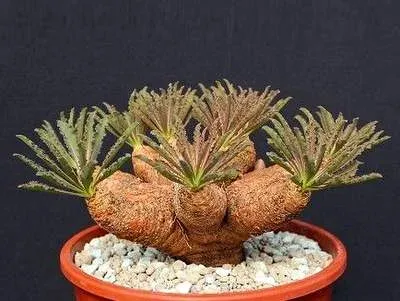
Curly Spurge (Euphorbia crispa) is a unique perennial succulent species belonging to the Euphorbiaceae family. It is recognized for its specialized adaptation to arid environments, originating primarily from the southern regions of the African continent.
The botanical structure of this plant features thick, moisture-storing stems and uniquely curled leaves. These features allow the plant to thrive in regions where water availability is sporadic and solar radiation levels are exceptionally high throughout the growing season.
In terms of soil requirements, this crop demands a well-draining substrate, such as sandy loam or grit-based media. Clay-heavy soils must be avoided as they promote moisture retention, which inevitably leads to the decline of the plant’s root system in an agricultural setting.
Environmental conditions for successful production require temperatures consistently between 20°C and 30°C. During the vegetative period, the crop benefits from full exposure to sunlight, which ensures the development of high-quality biomass and maintains plant health.
Agronomic management relies on a strict 'soak and dry' irrigation cycle. Nitrogen-heavy fertilizers should be avoided to prevent succulent, weak growth that is susceptible to collapse or insect infestations, focusing instead on phosphorus and potassium ratios.
Main diseases and pests
The most significant threats to the crop are fungal pathogens, specifically those causing root rot like Fusarium. These diseases flourish if irrigation practices lead to waterlogged conditions, making careful water management the top priority for farmers.
Spider mites represent the primary pest challenge for this species. These tiny arachnids thrive in warm, dry environments and can severely damage the photosynthetic tissue of the leaves if left untreated by appropriate acaricides.
Powdery mildew is a common foliage disease triggered by poor air circulation. Implementing adequate plant spacing and ensuring sufficient airflow between individual plants is essential for maintaining a healthy and disease-free crop stand.
Mealybugs are another common pest that tends to hide in the joints of the stems. Because of the plant's succulent nature, manual removal or targeted systemic insecticides are necessary to control populations without damaging the plant's skin.
Viral infections can cause stunted growth and chlorosis, often introduced via contaminated cutting tools. Strict sanitation protocols are required when pruning or harvesting to ensure the long-term viability of the agricultural production area.