
Euphorbia cremersii
Euphorbia cremersii
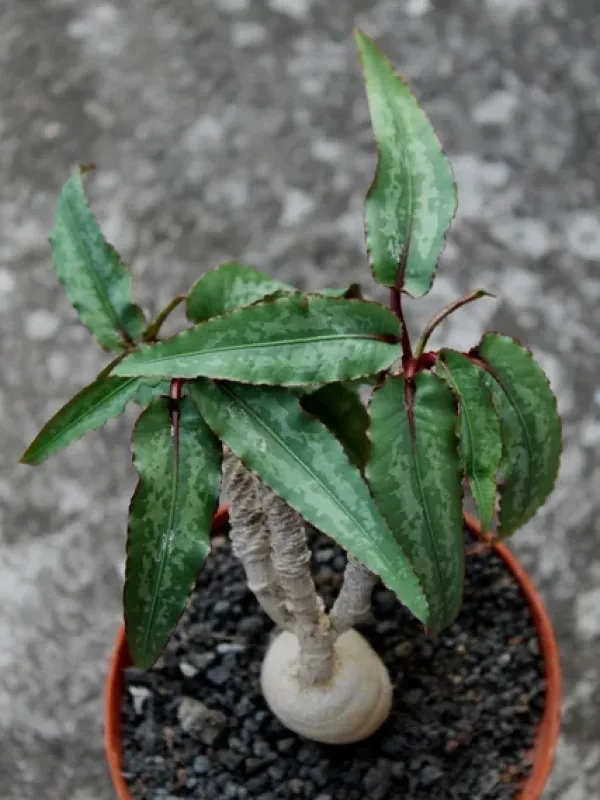
Description
Growing requirements
Euphorbia cremersii is a remarkable caudex-forming succulent species native to Madagascar, belonging to the Euphorbiaceae family. Its distinct architectural form makes it a highly prized specimen for specialized horticultural collections and indoor cultivation.
The substrate for this plant must be extremely porous to mimic its natural rocky environment. A mix of pumice, lava rock, and a small amount of organic material is recommended to ensure that water drains away from the caudex, which is highly prone to rot if kept too wet.
Providing optimal light is essential for maintaining the health of Euphorbia cremersii. It thrives in bright, filtered sunlight, as intense direct sun can scorch the foliage, while insufficient light leads to etiolation and weakens the plant's structural integrity.
Temperature management should prioritize consistency, ideally staying between 22 and 26 degrees Celsius during the growing season. In winter, the plant enters a dormant phase where temperatures should be kept slightly cooler, and watering should be significantly reduced.
Watering practices must be disciplined, following the 'soak and dry' method. It is crucial to allow the soil to become completely dry between waterings to prevent root rot and ensure that the plant retains its characteristic compact habit.
Main diseases and pests
The primary threat to Euphorbia cremersii is fungal infection associated with moisture management. If the substrate remains damp for too long, the plant is susceptible to various types of root and collar rot, which can quickly prove fatal to the specimen.
Mealybugs are the most common pests, often settling in the tight crevices around the caudex or leaf joints. These pests feed on sap, leaving behind sticky residues that can also lead to the development of sooty mold.
Spider mites can also be a problem, particularly in dry indoor environments with poor air circulation. They cause fine webbing and discoloration of the leaves, which can lead to premature leaf drop if not addressed promptly.
Preventive care involves regular inspection of the plant's growth points and maintaining good ventilation around the pot. If an infestation occurs, application of systemic pesticides may be required, provided the plant's sensitivity to chemicals is considered.
As with all Euphorbia species, the plant contains a white, latex-like sap that is toxic and irritating. Always wear protective equipment when pruning or repotting to avoid contact with skin and eyes.