
Cooper's Euphorbia
Euphorbia cooperi
Description
Growing requirements
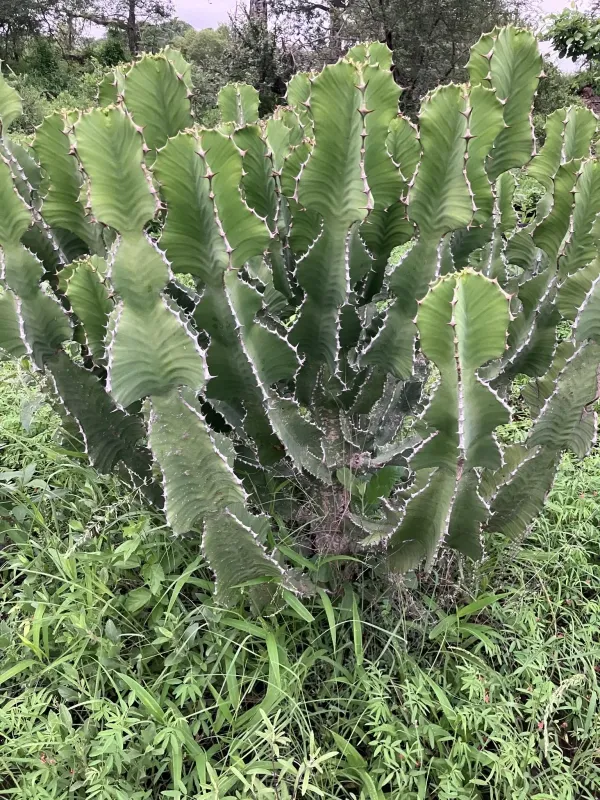
Cooper's Euphorbia (Euphorbia cooperi) is a prominent succulent belonging to the Euphorbiaceae family. It is native to the dry regions of South Africa, where it thrives in rocky environments and sun-drenched habitats.
This species is highly recognizable by its columnar, branched structure that resembles a candelabra. The stem is deeply ribbed with sharp, paired spines, which serve as a protective mechanism against herbivores in its natural environment.
Successful cultivation requires intense sunlight and excellent drainage. As a drought-tolerant plant, it is adapted to periods of scarcity, so the substrate should be composed mostly of mineral materials like sand, perlite, and fine gravel.
Temperature management is crucial, as this plant is strictly tropical and cannot withstand frost. In temperate zones, it is typically grown in greenhouses or as a conservatory plant where heat can be regulated throughout the year.
Watering must be kept to a minimum during the dormant winter period to prevent rot. The soil must be allowed to dry out completely between waterings, ensuring that the roots are not subjected to prolonged moisture.
Main diseases and pests
The primary threat to Euphorbia cooperi is the development of rot, which usually stems from poor drainage or overwatering. Once rot affects the core of the stem, it is often difficult to save the plant from structural collapse.
Insect pests such as mealybugs and spider mites are common problems in indoor cultivation. These pests tend to congregate in the deep folds between the ribs, making manual removal or spray application difficult.
To maintain plant health, it is essential to monitor for signs of infestation regularly. Using insecticidal soaps or systemic treatments can help manage these populations before they cause significant damage to the epidermis.
Bacterial infections can enter through wounds caused by pruning or accidental bumps. It is advisable to treat any mechanical damage with a fungicide or sulfur powder to ensure the wound dries and calluses over properly.
Safety is paramount when handling this species due to its toxic, milky sap. This latex-like substance is a severe skin and eye irritant, requiring the use of protective gloves and eye protection during any horticultural maintenance.