
Euphorbia confinalis
Euphorbia confinalis
Description
Growing requirements
Euphorbia confinalis is a notable succulent species within the Euphorbiaceae family, native to the arid landscapes of Southern Africa. As a drought-tolerant plant, it has evolved specific physiological adaptations to thrive in regions where water scarcity is the primary environmental stressor.
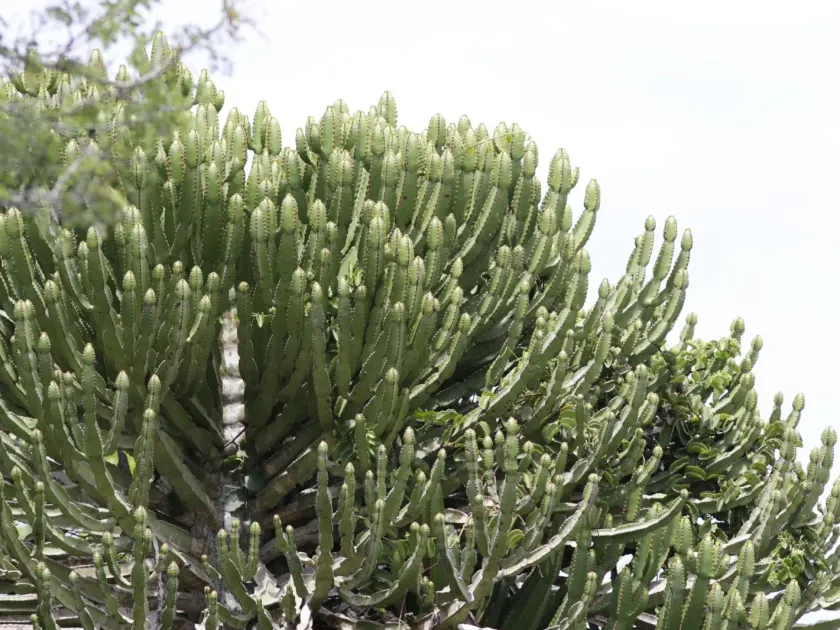
The morphology of this plant is characterized by a sturdy, succulent stem structure often reaching tree-like proportions. It possesses a segmented appearance with ridges and thorns, which serve both as a protective mechanism against herbivores and as a means of shade to reduce thermal stress on the epidermis.
Regarding cultivation requirements, Euphorbia confinalis demands high solar radiation and well-draining soil media. The substrate must be highly mineralized, incorporating coarse sand or grit to prevent water accumulation, which poses the greatest risk to the plant's health.
Climatic conditions for optimal growth must mimic its natural habitat, requiring warm temperatures and protection from frost. During the winter dormancy phase, irrigation should be strictly limited to prevent metabolic stress and root rot associated with cold, damp conditions.
In terms of agricultural and horticultural utility, Euphorbia confinalis is primarily utilized as an ornamental specimen in dryland gardening and succulent collections. Due to its distinctive structure, it is highly valued by landscape architects for projects requiring minimal water input and high aesthetic interest.