
Euphorbia clivicola
Euphorbia clivicola
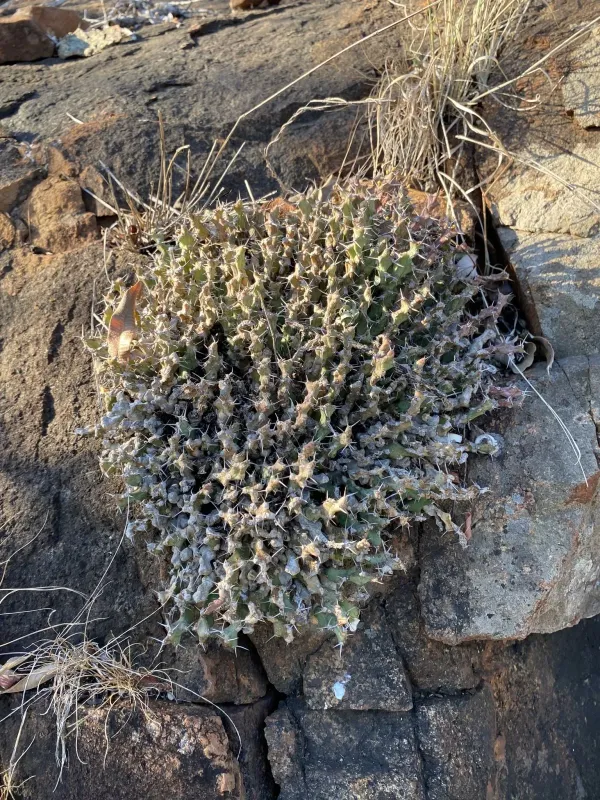
Description
Sowing dates
Euphorbia clivicola is a specialized perennial plant belonging to the Euphorbiaceae family. This species is naturally adapted to rocky terrain, resulting in a unique growth pattern that requires patience during the initial stages of development.
Sowing should ideally occur in late spring when ambient temperatures are consistently warm. Providing a stable thermal environment is essential for the successful germination of seeds, which are typically sensitive to cold.
Prior to planting, seeds often benefit from a period of cold stratification. This mimics the environmental cycles of their native habitat and helps to break dormancy, ensuring a more uniform emergence of seedlings.
The planting substrate must be exceptionally well-draining, consisting of a mix of sand, grit, and minimal organic matter. Seeds should be sown at a shallow depth to prevent rot and allow sufficient gas exchange for the emerging roots.
During the early weeks, maintain steady but not excessive moisture. Once the seedlings have reached the stage of developing their first true leaves, they should be carefully transplanted to individual pots to reduce root competition.
Growing requirements
This species requires conditions that replicate its arid, rocky origin. Full sun exposure is non-negotiable for Euphorbia clivicola, as it helps maintain its compact form and prevents etiolation of the stems.
Soil composition is critical; heavy or nutrient-rich soils will lead to root asphyxiation and eventual plant death. A specialized succulent or cactus mix, heavily amended with volcanic rock or grit, is recommended.
In regions prone to high winter rainfall, protective measures such as cold frames or greenhouse cultivation are necessary to keep the plants dry. This is the single most important factor in preventing winter loss.
Temperature fluctuations should be minimized. While the plant is drought-tolerant, it requires periodic watering during the active growing season to support its metabolic needs and flower production.
Fertilization should be kept to a absolute minimum. Using a diluted, low-nitrogen liquid fertilizer once or twice per growing season is sufficient to support healthy growth without causing soft, weak tissue that is prone to pests.
Yield
The economic value of Euphorbia clivicola lies primarily in the specialty plant trade, serving collectors of rare succulents and drought-tolerant landscape designers. The harvest is defined by the quality and aesthetic appeal of the individual plants.
Productivity in a nursery setting is measured by the successful development of a robust root system and a symmetrical growth habit. Proper light levels are the primary driver of high-quality plant development.
Propagation through vegetative means, such as cuttings or division, is the standard practice for preserving specific traits. However, seed production remains the best method for increasing overall inventory if controlled pollination is performed.
Manual pollination is necessary for consistent seed yields. Carefully transferring pollen between flowers ensures a higher set of viable seeds, which can then be collected as the fruit pods ripen and begin to dry.
Consistent growth is achieved through precise environmental control. Avoiding rapid, forced growth ensures the plant retains its natural, compact structure, which is highly valued by enthusiasts and collectors.
Main diseases and pests
The most significant threats to this species are fungal infections induced by poor aeration and excess moisture. Root rot (Phytophthora and Rhizoctonia) is a major risk that can spread quickly if soil stays wet for too long.
Pests, particularly mealybugs and spider mites, are common in greenhouse environments. These pests thrive in dry, stagnant air, necessitating regular monitoring of the crown and growth points to detect early infestations.
Mechanical damage to the succulent tissue can introduce pathogens, as the plant's sap is a prime site for infection. Always use disinfected tools and allow any cuts to callus over before planting them in substrate.
Preventive care is more effective than treatment. This includes maintaining excellent drainage, ensuring good ventilation, and adhering to strict watering schedules that allow the substrate to dry out completely.
- Use systemic fungicides only as a last resort.
- Check undersides of leaves for signs of spider mite webbing.
- Keep the root crown dry by placing a layer of grit on the soil surface.