
Prostrate spurge
Euphorbia chamaesyce
Description
Growing requirements
Prostrate spurge (Euphorbia chamaesyce) is an annual herbaceous plant belonging to the Euphorbiaceae family. It is widely recognized in agriculture as a troublesome weed that thrives in disturbed areas and open fields.
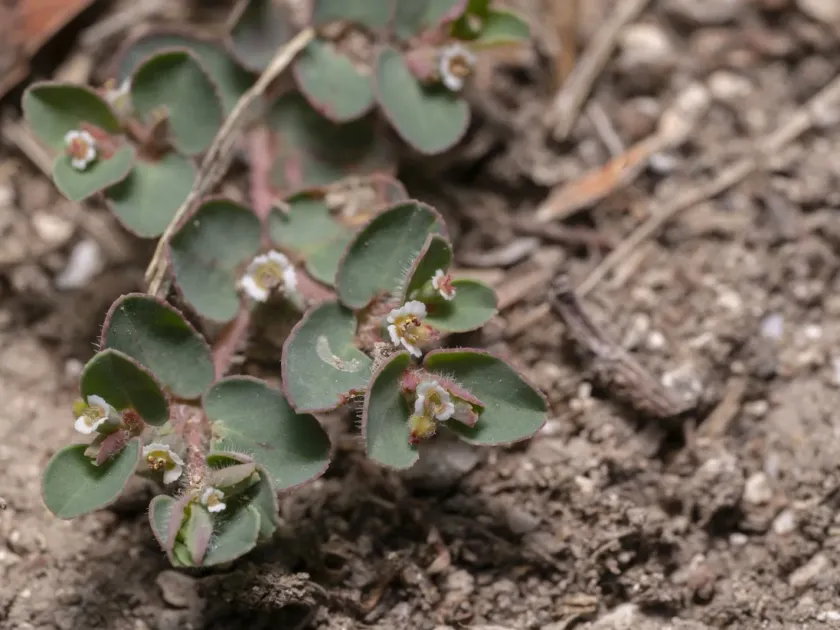
The plant features prostrate, mat-forming stems that spread radially across the ground. The leaves are small, opposite, and often bear a distinct dark spot at the center, characteristic of the species.
This species is highly adapted to dry, sandy, or light-textured soils. It displays remarkable drought tolerance and thrives in high-temperature environments, making it a persistent competitor in hot climates.
It colonizes agricultural lands, particularly in row crops, where it competes for light and space. Its ability to produce large quantities of seeds ensures its presence in subsequent growing seasons.
The taproot system of the prostrate spurge allows it to access water deep within the soil profile. This physiological trait enables the weed to survive intense dry spells that might otherwise stunt less robust neighboring vegetation.
Main diseases and pests
The main agronomic threat posed by prostrate spurge is its intense competition with crop plants for soil moisture and available nutrients. This leads to reduced crop biomass and final yield loss.
Prostrate spurge contains milky, toxic latex that can cause irritation to humans and is poisonous to livestock. Contamination of hay or grazing land with this weed can lead to serious health issues for farm animals.
Cultural control methods such as crop rotation and the use of competitive cover crops are effective in shading the soil surface, which inhibits the germination and growth of the spurge.
Chemical control involving the targeted application of herbicides is widely practiced in fields with significant infestations. Early detection and treatment are crucial before the plant sets seeds.
Sanitation practices, including the cleaning of tillage equipment, play a vital role in slowing the spread of seeds across different sections of farmland, preventing further colonization.