
Carniolan spurge
Euphorbia carniolica
Description
Growing requirements
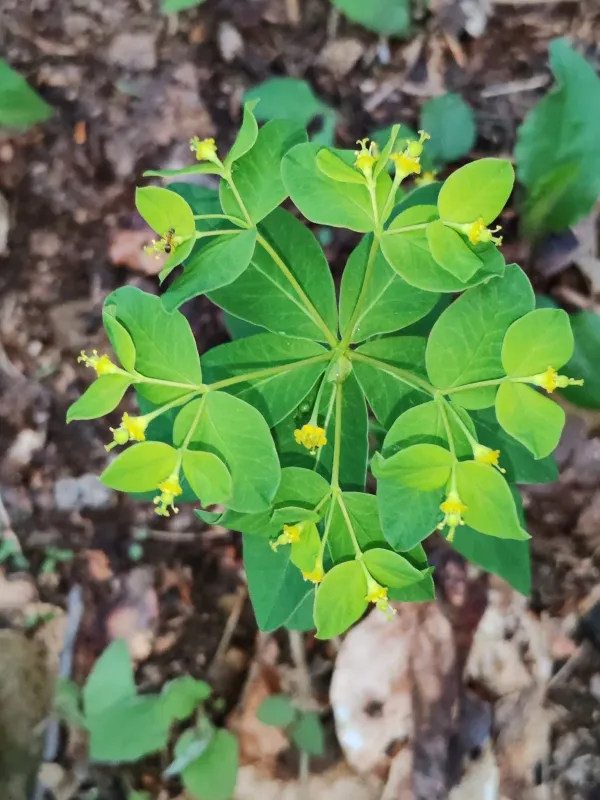
Carniolan spurge (Euphorbia carniolica) is a herbaceous perennial plant belonging to the Euphorbiaceae family. Native to the mountainous regions of Central and Southeastern Europe, it typically thrives in forest understories and damp meadows where the microclimate provides consistent humidity.
Botanically, this species is noted for its erect, slender stems reaching heights of up to 50 cm. The plant displays lanceolate leaves and unique inflorescences with yellowish-green bracts. These structures are the main aesthetic appeal of the plant, blooming predominantly during the spring season.
The culture requires fertile, well-drained soil with a neutral to slightly acidic pH level. It is essential to ensure that the site does not accumulate standing water, as the root system of this species is highly susceptible to rot when subjected to waterlogged soil conditions for extended periods.
Regarding climate, the plant prefers temperate conditions with partial shade. While it can tolerate some sun, it is best suited for areas where it is protected from the harshest afternoon rays, which can scorch the foliage and reduce the overall vigor of the plant during the mid-summer heat.
Agricultural maintenance involves keeping the soil consistently moist but not saturated. Mulching around the base of the plant during the autumn can help regulate soil temperature and protect the roots during colder months, although the species is generally considered winter-hardy in temperate zones.
Main diseases and pests
The primary threats to Euphorbia carniolica include fungal pathogens such as rust and root rot. These issues are almost always secondary to poor drainage or inadequate air circulation, so maintaining a clear space around the plant is the best cultural control method.
In terms of pests, aphids are the most common nuisance. These insects congregate on the tender young growth and suck sap, potentially transmitting viral diseases. Control can be achieved through the use of mild horticultural soaps or by encouraging beneficial predatory insects in the planting area.