
Euphorbia cap-saintemariensis
Euphorbia cap-saintemariensis
Description
Growing requirements
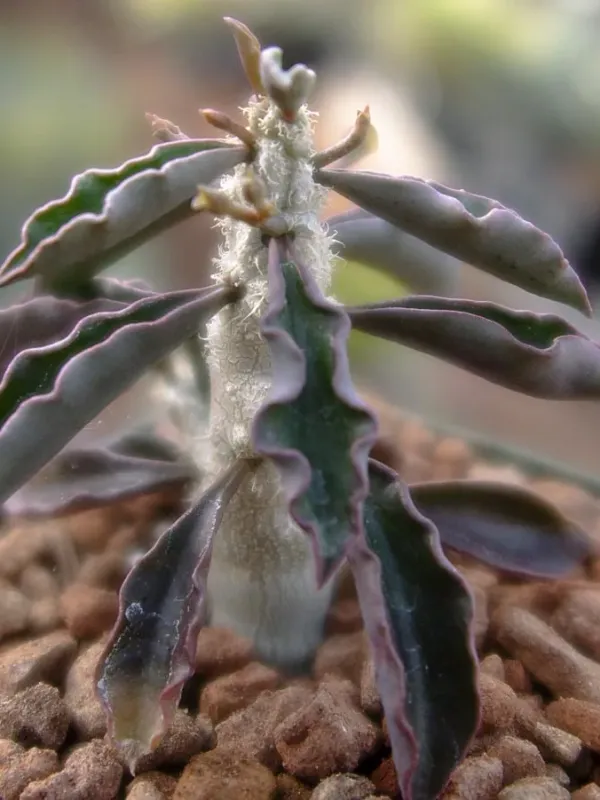
Euphorbia cap-saintemariensis is a rare, dwarf succulent species belonging to the Euphorbiaceae family, native to the Cap Saint-Marie region of Madagascar. It is highly valued in horticulture for its architectural shape and unique growth pattern.
The plant features a thickened, woody stem structure and narrow, lance-shaped leaves that can turn deep red under intense sunlight. As a slow-growing species, it is perfectly adapted to the harsh, dry, and rocky environments of its natural habitat.
For cultivation, a highly inorganic, fast-draining substrate is mandatory. A mixture consisting of 70-80% grit, perlite, and pumice with a small amount of organic compost is recommended to ensure proper aeration and prevent moisture retention around the root collar.
This species requires high light intensity to thrive and maintain its compact form. It is best suited for greenhouse cultivation or sunny windowsills where it can receive at least 6 to 8 hours of direct light daily, with temperatures ideally ranging from 20°C to 30°C.
Propagation is typically done via seeds or grafting, as cuttings are difficult to root. Careful handling is necessary at all times because the plant exudes a milky, toxic latex that is a strong skin and eye irritant, typical of the Euphorbia genus.
Main diseases and pests
The primary threat to Euphorbia cap-saintemariensis is root rot, which is almost always the result of improper watering or heavy, moisture-retentive soil. Once rot sets in, the plant often cannot be saved, making preventative drainage management critical.
Mealybugs are the most common pest, often colonizing the crevices of the stem and the base of the leaves. These pests are difficult to eradicate once a heavy infestation occurs, so manual removal with alcohol-dipped swabs is often the safest initial step.
Spider mites are another major concern, especially in arid indoor conditions where air circulation is poor. They damage the epidermis, leading to unsightly scarring and reduced vitality, which makes the plant more susceptible to opportunistic fungal infections.
To maintain plant health, it is essential to ensure consistent air movement. Stagnant air environments promote the growth of surface molds and pathogens, which can rapidly compromise the integrity of the succulent's stem tissues.
Fungicide applications should be used sparingly and only when necessary. Since succulents have sensitive outer layers, always test any chemical treatment on a small, inconspicuous area before applying it to the entire plant to avoid phytotoxicity.