
Canary Island Spurge
Euphorbia canariensis
Description
Sowing dates
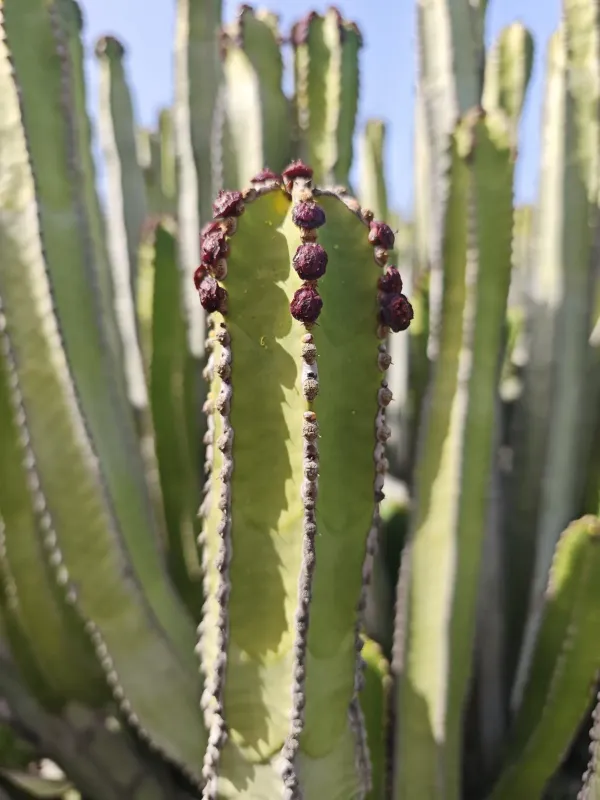
The Canary Island Spurge, known scientifically as Euphorbia canariensis, belongs to the family Euphorbiaceae, which is characterized by diverse growth forms.
Propagation is typically achieved through stem cuttings, which are harvested during the active growing season in late spring or summer.
After being cut, the stalks must be left in a dry, shaded area for several days to allow a callous to form on the surface.
The prepared cuttings are then planted in a coarse, well-draining substrate to prevent moisture accumulation at the base.
Growing from seeds is possible but significantly slower, requiring consistent warmth and precise humidity control to ensure germination success.
Growing requirements
This succulent is native to the Canary Islands, thriving in hot, arid environments with high levels of direct solar radiation.
The soil must have excellent drainage properties, typically composed of sand, volcanic rock, or specialized succulent potting mixtures.
Climate requirements include protection from frost, as the plant is not cold-hardy and requires temperatures above 10 degrees Celsius.
Watering should be very restricted, especially during the dormant winter months when the plant reduces its physiological activity.
Adequate air circulation is essential for maintaining the health of the plant and preventing the onset of rot-inducing pathogens.
Main diseases and pests
Root and stem rot are the primary threats, usually caused by overwatering or using a heavy, moisture-retentive soil medium.
Pests such as mealybugs and spider mites are known to infest the succulent stems, particularly in enclosed or poorly ventilated environments.
The plant possesses a potent milky latex that acts as a natural chemical defense against most herbivores, although it is toxic to humans and animals.
Management of these pests involves physical removal or the application of appropriate systemic pesticides to avoid damaging the plant tissue.
Proper hygiene, such as removing dead organic matter from the base, helps significantly in reducing the risk of bacterial and fungal outbreaks.