
Blue spurge
Euphorbia caerulescens
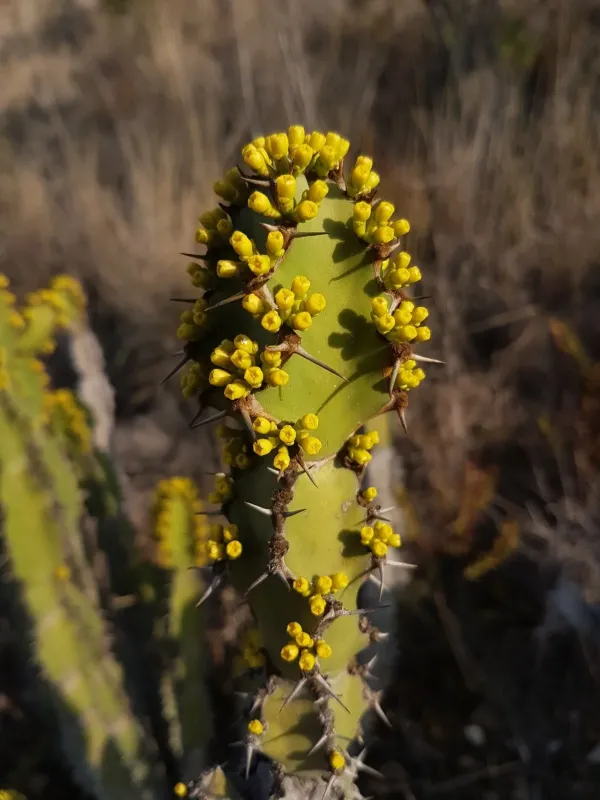
Description
Growing requirements
Euphorbia caerulescens, commonly known as the blue spurge, is a succulent shrub belonging to the Euphorbiaceae family. Native to the arid regions of Southern Africa, this species is highly adapted to harsh environments characterized by prolonged drought and poor soil quality.
The plant features distinctively ribbed, glaucous-blue stems that act as reservoirs for moisture. These structures are designed to withstand extreme desiccation, making the species highly resistant to water scarcity, yet it remains vulnerable to root rot if moisture levels are not carefully managed.
Cultivation requires a growing medium that mimics rocky or sandy soils. Excellent drainage is the single most important factor for success, as stagnant water will quickly cause the degradation of the succulent tissues. A high-light environment is necessary to maintain the plant's characteristic coloration and growth form.
Agricultural management is minimal, focusing on controlled irrigation schedules that allow the soil to dry out completely between waterings. Fertilization should be kept to a minimum, using low-nitrogen formulations designed for cacti to prevent succulent tissue from becoming overly soft and susceptible to pests.
The blue spurge is primarily utilized in xeriscaping and ornamental horticulture due to its unique architectural appearance. It serves as a durable component in low-maintenance landscapes where water conservation is prioritized, often used to prevent erosion in dry, stony areas.
Main diseases and pests
The most significant pathological threats to Euphorbia caerulescens are fungal infections, typically triggered by improper irrigation or poor air circulation. Prevention is focused on ensuring adequate substrate porosity and keeping the stems dry during cooler periods.
Common pests that target the blue spurge include mealybugs and spider mites. Because the stems have deep ribs, these insects can easily hide, necessitating the use of systemic insecticides to ensure complete eradication and to protect the plant's structural integrity.