
Euphorbia bupleurifolia
Euphorbia bupleurifolia
Description
Growing requirements
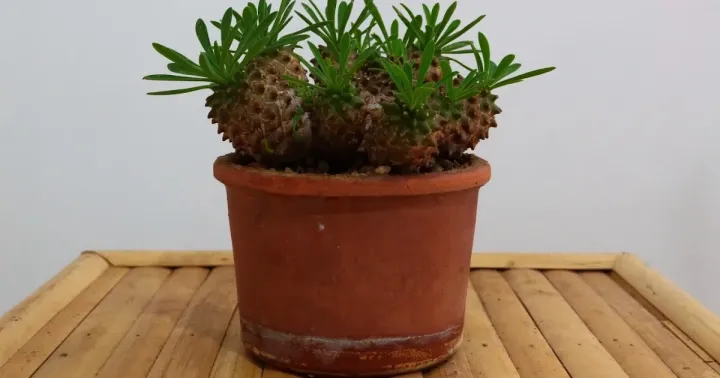
Euphorbia bupleurifolia is a fascinating species of caudiciform succulent belonging to the Euphorbiaceae family. It is endemic to South Africa, specifically the KwaZulu-Natal region, where it has evolved to survive in rocky, nutrient-poor soils and arid environmental conditions.
The plant is highly prized for its unique, pineapple-like stem, which serves as a specialized water-storage organ known as a caudex. This adaptation allows the plant to survive prolonged droughts, making it a distinctive specimen for collectors of arid-land flora.
Agricultural requirements include a porous, fast-draining substrate mix. A blend of coarse mineral soil, pumice, and minimal organic matter is essential. Poor drainage remains the most significant risk to the root system, often leading to rapid tissue death in the caudex.
Temperature management is critical for this species. It thrives in warm, sunny conditions during the summer months, with ideal temperatures ranging between 22°C and 28°C. During the winter dormancy period, temperatures should drop to a cooler 10°C to 15°C range with total water withdrawal.
Light exposure must be consistent throughout the growing season. While the plant requires intense sunlight to maintain its compact growth form, shade cloth should be used during peak solar intensity to prevent sunburn on the younger, more sensitive tissues of the plant.
Main diseases and pests
Common pests include spider mites and mealybugs, which thrive in stagnant, dry environments. These pests frequently congregate in the crevices of the leaf-bearing apex, where they feed on the plant's sap and may introduce secondary pathogens that damage the growing point.
Fungal and bacterial infections are the most lethal threats to Euphorbia bupleurifolia. These are primarily caused by over-watering during periods of low light or low temperature. If the caudex becomes soft or discolored, it is often a sign of internal rotting which is difficult to reverse once started.