
Short-jointed euphorbia
Euphorbia breviarticulata
Description
Growing requirements
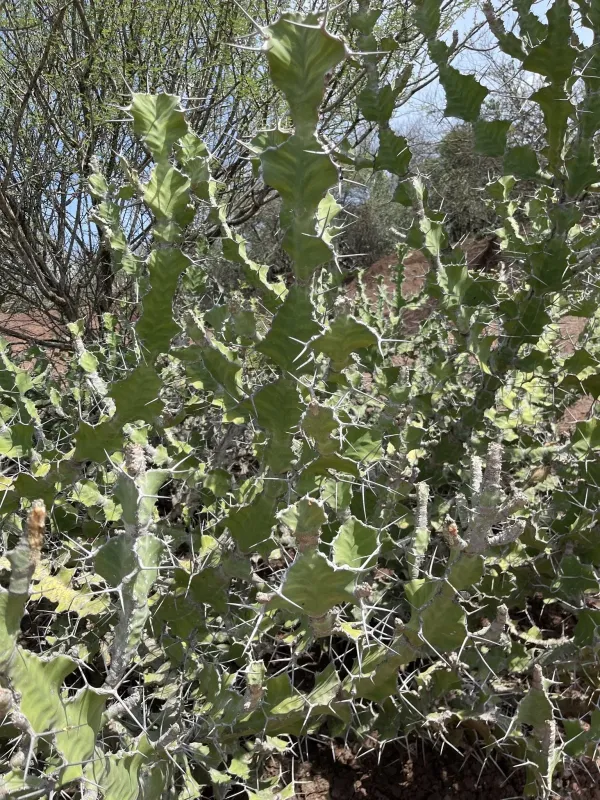
The short-jointed euphorbia (Euphorbia breviarticulata) is a perennial succulent plant belonging to the Euphorbiaceae family. This species is characterized by its segmented, cylindrical stems, which have evolved to store water, allowing the plant to thrive in harsh, arid environments of its native East African range.
The plant is native to dry rocky landscapes of Ethiopia and Somalia, where it grows in nutrient-poor but well-draining soils. These regions are defined by extreme temperature fluctuations and intense, direct sunlight, forcing the plant to adopt a slow-growth strategy focused on moisture conservation.
Successful cultivation of Euphorbia breviarticulata requires a climate that strictly avoids freezing temperatures. The plant demands a high-light environment and must be shielded from any conditions that promote high humidity or soil moisture saturation, as it is highly susceptible to tissue collapse.
The agricultural or horticultural management of this species involves using highly porous substrate mixes, primarily consisting of mineral components like sand, grit, and perlite. Irrigation should be sparse, performed only during the growing season when the substrate is completely dry to the touch.
In terms of economic and practical use, the short-jointed euphorbia is valued primarily in the ornamental horticulture sector. It is a prized specimen for xeriscaping, specialized succulent collections, and botanical displays that mimic natural arid habitats, contributing to the diversity of desert landscaping.
Main diseases and pests
The most significant threats to Euphorbia breviarticulata are fungal infections and rot caused by overwatering. These pathogens quickly invade the succulent tissue, turning firm, green stems into soft, blackened material that is irreversible once the structural integrity is compromised.
Pests such as mealybugs and spider mites are known to infest the plant, particularly in glasshouse environments where airflow is insufficient. Regular inspection is necessary, and infestations should be managed with systemic insecticides or gentle manual removal to preserve the aesthetic value of the plant.