
Euphorbia bothae
Euphorbia bothae
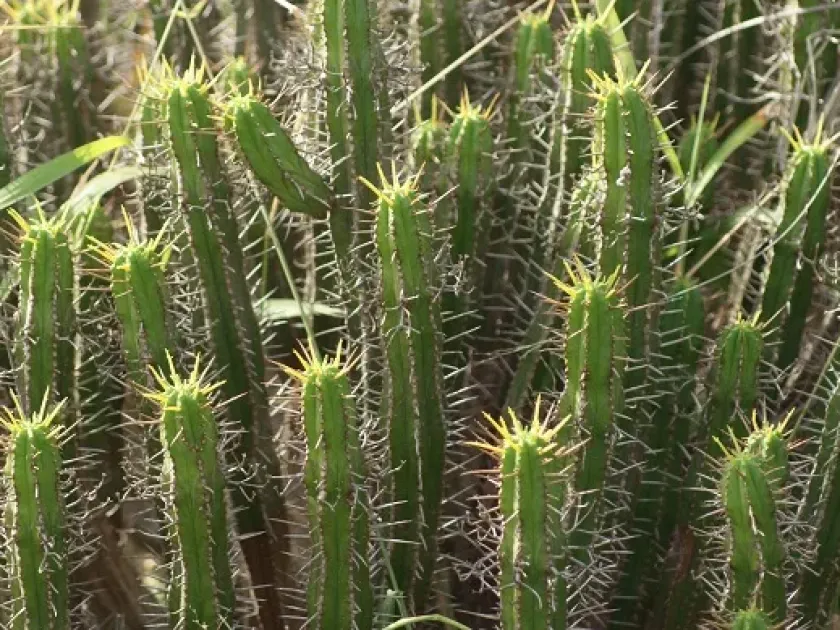
Description
Growing requirements
Euphorbia bothae is a perennial succulent species belonging to the Euphorbiaceae family. It is native to arid regions of Africa, where it has evolved distinct biological mechanisms to survive under harsh environmental conditions.
The plant demonstrates exceptional resilience to high thermal indices and severe water scarcity. In an agricultural context, it requires well-drained, porous soils such as sandy or rocky substrates to ensure proper aeration and prevent root rot.
Light exposure is a critical factor for the successful cultivation of this species. It thrives under full sun, requiring maximum solar radiation to maintain its structural integrity and physiological processes typical of succulent flora.
Irrigation practices must be strictly controlled, as the species is highly susceptible to root decay when exposed to excess moisture. During the dormant season, water application should be significantly reduced or suspended entirely.
The primary utility of Euphorbia bothae lies in its ornamental potential and its capacity to thrive in xeric landscapes. Its hardiness makes it a valuable candidate for restoration projects or xeriscaping in regions with limited water resources.